Clemency, Courage, & Redemption | Governor Eric Greitens

Judd Shaw

Eric Greitens
Episode Summary
Judd Shaw sits down with former Missouri Governor Eric Greitens to discuss the powerful story of Judy Henderson, a woman freed after 36 years in prison for a crime she did not commit. Greitens shares the moving encounter with Judy’s daughter that led him to personally review her case and grant clemency, shedding light on the importance of compassion, resilience, and leadership rooted in empathy. The conversation explores flaws in the justice system, the transformative power of brave storytelling, and how opening our hearts can lead to true acts of courage and lasting change. This heartfelt episode offers hope, inspiration, and a reminder that even in our darkest moments, connection and love can bring light.
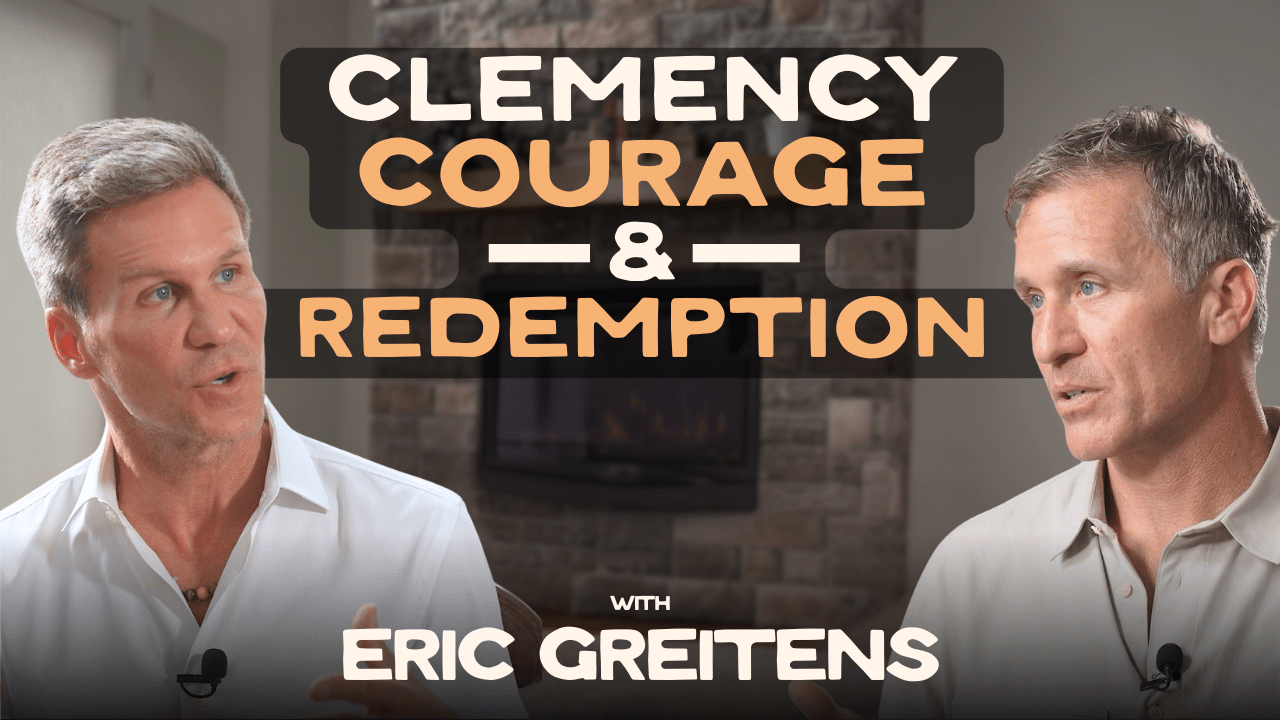
Listen Now:
Episode 3.4
Sometimes, a single plea in a crowd can spark a chain reaction that changes everything—even the fate of a woman wrongfully imprisoned for 36 years.
In this fourth episode of the Judy Henderson series, Judd sits down with former Missouri Governor Eric Greitens—the man who granted clemency to Judy Henderson, freeing her after decades behind bars for a crime she did not commit. But this isn’t just about policy or pardons. It’s about what happens when leadership meets heart, when courage is rooted in love, and when true justice demands more than playing by the rules.
Greitens shares the behind-the-scenes story of how a moment of “divine intervention”—when Judy’s daughter Angel approached him at a vandalized Jewish cemetery—set in motion a deep review of thousands of overlooked clemency pleas. Through candid reflections, Greitens opens up about the burdens and responsibilities of power, the unseen weight carried by those waiting for hope, and how keeping your heart open as a public servant can help right grievous wrongs.
5 Lessons from the Episode:
Every story matters: Behind every plea for help is a human being who deserves acknowledgment and respect.
Leadership means leading with heart: True courage comes from empathy, listening, and daring to act with compassion—even when it’s risky.
Resilience is built in connection: Overcoming hardship is possible when we reach out, show up, and support each other through vulnerability.
Stories heal and empower: Sharing our pain and triumphs invites others to begin their own path to healing and hope.
Justice calls for wisdom and courage: Fixing what’s broken isn’t just about following rules—it’s about having the vision and bravery to make things right.
Guest This Week:
Eric Greitens
Eric Greitens is a decorated former Navy SEAL, bestselling author, and the 56th Governor of Missouri. Widely recognized for his leadership in both military and public service, Eric is known for championing justice and second chances, most notably granting clemency to Judy Henderson after 36 years of wrongful imprisonment. Drawing on experiences from war zones to the governor’s office, he brings deep insight into resilience, courageous leadership, and the power of compassionate action. Eric’s bestselling books, including Resilience, have inspired readers worldwide, and his work has transformed countless lives—bridging the gap between strength and vulnerability, heart and action. His authentic, heart-centered storytelling has earned him praise as a thought leader on both overcoming personal adversity and reforming broken systems.
Eric Greitens is a decorated former Navy SEAL, bestselling author, and the 56th Governor of Missouri. Widely recognized for his leadership in both military and public service, Eric is known for championing justice and second chances, most notably granting clemency to Judy Henderson after 36 years of wrongful imprisonment. Drawing on experiences from war zones to the governor’s office, he brings deep insight into resilience, courageous leadership, and the power of compassionate action. Eric’s bestselling books, including Resilience, have inspired readers worldwide, and his work has transformed countless lives—bridging the gap between strength and vulnerability, heart and action. His authentic, heart-centered storytelling has earned him praise as a thought leader on both overcoming personal adversity and reforming broken systems.
Show Transcript
Judd Shaw:
She describes it like divine intervention, that every step she took, the sea of people just parted. And she walks up to you and says, governor, my mom is serving life in prison for crimes she didn’t commit. Her clemency package is sitting on your desk. Please look at it.
Eric Greitens:
One of the things that we found there was a stack of over 5,000 letters from prisoners that had been written to the governor’s office that had not been responded to. And I told the team, I said, look, we’re probably gonna say no to 95, 98, 99% of these letters, but these are all human beings, and they deserve a reply.
Judd Shaw:
I’m sitting here with the man who gave Judy Henderson her freedom after 36 years in prison for a murder that she did not commit. Governor Eric Ritens. Welcome to behind the Armor.
Eric Greitens:
Judd, it is really, really great to be here with you. Thank you for bringing life to Judy’s story. Thank you for exposing people to it. Thank you for what you’re doing for Judy, man. It’s a real pleasure to be here with you.
Judd Shaw:
Before we go to the pardon.
Eric Greitens:
Yes.
Judd Shaw:
We need to go back to the beginning.
Eric Greitens:
Yes.
Judd Shaw:
And it’s not about the courtroom, the clemency paperwork, but a Jewish cemetery.
Eric Greitens:
Yeah.
Judd Shaw:
In the wake of a terrible vandalism, Governor, you were there rallying support. The vice President of the United States was there. Tight security, Secret Service. And Angel, Judy’s daughter, she drove hours to be there.
Eric Greitens:
Yes.
Judd Shaw:
Really an opportunity to try to see you. And as she explains, she was ready to leave after cleaning up gravestones like everyone else. And she sees you in a pack of circle, and she describes it like divine intervention, that every step she took, the sea of people just parted. And she walks up to you and says something to the extent of, governor, my mom is serving life in prison for a crime she didn’t commit. Her clemency package is sitting on your desk. Please look at it.
Eric Greitens:
Yeah.
Judd Shaw:
And she remembers that you looked at her in the eyes and said you would. And that you’d go back and pull her file. She then reports to her mother that after every thing she’s been through in working for her release, she felt that this was different.
Eric Greitens:
Yeah.
Judd Shaw:
What do you remember about that moment in that day?
Eric Greitens:
Well, I’ll just start with Angel. I remember Angel. I remember her face. I remember her love for her mother, and I remember her concern. I don’t remember the exact words that she said, but I do remember her saying that her mom was in prison and that she needed our help.
Eric Greitens:
And.
Eric Greitens:
It might be helpful. I’ll put in context what I was bringing to that, to that moment, which was that when I became governor. So, you know, when you. When you become governor, you go, you give your inauguration speech, you review the troops, you walk around, you shake some hands, you come into the office, and then, you know, you find things, right? One of the things that we found was that there was a stack of over 5,000 letters from prisoners that had been written to the governor’s office that had not been responded to. And I told the team, I said, look, we’re probably going to say no to 95, 98, 99% of these letters, but these are all human beings, and they deserve a reply. And one of my principles, which I shared with the team, was that when you become governor, the election is over. You’re a governor for everyone. And that includes people who are in the prison system and their families.
Eric Greitens:
You’re a governor for everybody. And so what we had done at the time was we actually reached out to. And you might have. You’ve talked to Stacy Lantern, and we reached out to her and some others to get some help to have people come in and start to review all of these letters for us. So we. When angel said to me, my mom’s letter is on your desk, I’m thinking to myself, well, actually, there’s 5,000 of these letters, but we are going to get to them. We are going to get to them because we need to do this. And it was a really important moment.
Eric Greitens:
And I think that being there in the cemetery sort of spoke to what we were trying to do in office. You know, what had happened was that there was a terrible act of vandalism in a historic Jewish cemetery. And typically when that happens, what politicians do is that they go out and they put a message on social media and they say, our thoughts and prayers are with this people who this happened to. And we’ll be following developments closely. And that means nothing, just nothing changes. I told the team to put a message out on social media saying, look, let’s just go and use this terrible act as a way to become better. Let’s use this as a chance to bring people together and show people that in the face of this kind of hatred and vandalism, we can actually create something beautiful. So I had previously, I’d run an organization called the Mission Continues to help returning wounded veterans.
Eric Greitens:
I called a bunch of my veteran buddies and I said, listen, figure it out. We’re going to have three to five thousand volunteers there tomorrow. I think the team went out, they put a message on social media, saying that I would be at the cemetery the next day and that I was just going to be there to help clean it up and to make it more beautiful. And anybody who wanted to join me was welcome to do so. And as you said, Jed, by the time we arrived, there were helicopters overhead. There were thousands of people coming into the cemetery. The vice president was in the state at the time. He decided to actually join us at the cemetery.
Eric Greitens:
And it became this. This massive moment where we were really able to come together. And I remember I got up in the back of a pickup truck with a bullhorn, and I said to everybody, this is who we are. This is who we are. And we had. We called everybody and said, everybody’s welcome to come. And they did. Thousands of people came, and we left the cemetery far more beautiful than it was before the vandalism.
Eric Greitens:
And one of the great things, in retrospect, looking back on that day, was the fact that that was also the first time that I met angel and heard about Judy.
Judd Shaw:
And it’s also that moment that we’re tapping back into our humanity.
Eric Greitens:
Yeah.
Judd Shaw:
As a. As a. As a community, as a specie. And going back to those 5,000 letters, I understood, and I’m a lawyer by background, that in a clemency application, first you have to have a decision on your clemency application. And if it’s denied, you have to wait several years before you can apply for clemency again. And so if those are never responded to, if they’re never dealt with, the Judy Hendersons of the world are left without almost any future recourse or opportunity to be heard.
Eric Greitens:
Yeah.
Eric Greitens:
And it is so important that people are heard. And I think I want to pick up on two really important things you said there, Jed. One is about just connecting with people as human beings. One of the things that’s so disappointing about so many people who are in public life and public servants is that you look at them and you can see that their hearts are closed. People have these experiences all the time. They walk up to somebody who’s in office and they say, hey, I really need help, or I want this, or my kid has a disability and we’re not getting the support that we need, or my mom’s in prison or whatever it is, and you can see these public figures whose hearts and minds and faces are just closed, and they might shake somebody’s hand and say, oh, well, please give your card to my staff member and we’ll follow up. But they don’t really do it. And what happens to a lot of people in public life is because they’re always under attack.
Eric Greitens:
Like, they allow themselves to have their hearts close, and then their hearts. Their hearts shut off. And then when you meet someone like an angel, a lot of people, they’ve had their. Their hearts. Their hearts close. And I think it’s one of the great challenges in public life is to make sure that you really do keep your heart open to everything that actually comes your way. And I’m really proud of the fact that I did that and my team did that. We really listened to people when they came to talk with us, and we were able to make a big difference, obviously, for Judy and Angel, but for many others, because we were able to do that.
Eric Greitens:
And then. Yes, to the point that you were making about the response, I think that it’s just important for everybody to know that they’re going to be heard. So many times, that’s really all people want. They just want to know that they’re going to be heard. And I wanted to make sure that everybody who is in the state of Missouri, whatever their circumstance, including those people who are in prison, that they knew that they were going to have a chance to be hurt.
Judd Shaw:
At my speaking homepage at the top, it says, leadership starts with the heart.
Eric Greitens:
Yeah. Yes. Yes.
Judd Shaw:
I was at a recent book signing for Judy’s memoir, When the Light Finds Us. You weren’t there, but angel spoke and she said something that stopped the room. I didn’t catch the full moment, but I was able to manage recording a part of it. May I play it for you, please?
Eric Greitens:
Yes, yes.
Judd Shaw:
And we’ll capture this for the audience in a clip, but we’re going to start here.
Angel:
He promised me he would. And we took a picture. He’s like, you want to take a picture? I was like, yeah, they took a picture. And I went away. And I remember I went home and I told her when she called me and said, he’s going to do something. I know, I know. I just feel it’s different this time. And he has been great friend our family, Eric Greitens has.
Angel:
And he said that that made a difference. That day that he went back, it was like, pull her file. Who is this? And. And the process was continuing. You know, Shannon was working her angle. He did that. And. And then he had a lot of courage because governors don’t do that in their first term, like, ever.
Angel:
And not only did he do it, if you haven’t read the book, he actually went to the prison and released her himself. And before he did he apologized to each and every one of our family members there, that we had to suffer through that. And so I just. I want to, you know, give him a shout out, because that was very courageous of him. And he says that that’s the best thing he’s done. And. And so I just. I can’t go on without giving him credit.
Angel:
And then she. And so just imagine, like, I wanted my mom for so long, and then she comes home and I’m the mom.
Judd Shaw:
When you hear Angel’s voice and you think about the power you held.
Eric Greitens:
Yeah.
Judd Shaw:
The decision you made not for Judy or just. Not for just Judy.
Eric Greitens:
Right, right.
Judd Shaw:
But for her children. For her children’s children.
Eric Greitens:
Yeah.
Judd Shaw:
What does that moment now, years later, mean to you as a father, a man, and not just a governor?
Eric Greitens:
Well, I’ll tell you, I am incredibly proud of what we did. I’m really proud of what we did. And, you know, you were just speaking about, like, leadership begins with the heart. So does courage. You know, courage is fundamentally rooted in love. And at the end of the day, I think for all of us, for all of your listeners. Right. They might never be in a position to think about clemency or have a mom who’s in prison, but everybody faces fear, and everyone has a choice in their life every day to decide which one’s going to win.
Eric Greitens:
Like the love of the fear. That’s a decision that we all have to make. And what angel said is true. Like, governors, quote, never up to that point, pardoned people in their first year, in the first term. Because it’s politically risky. Because, you know, what if you let somebody out and then something happens?
Judd Shaw:
On crime.
Eric Greitens:
Yeah. You’re soft on crime, or you let them out and then they have a. They have an incident, and then you get blamed for it. And so it’s. It’s all from a political standpoint. It is all downside risk.
Eric Greitens:
Right.
Eric Greitens:
There’s no upside.
Eric Greitens:
Right.
Eric Greitens:
From a human standpoint, it is one of the most important things that you can possibly do. And this is a woman who your listeners will. Will get to know is just an incredible human being. And it was absolutely essential that she be out for this. For Judy’s sake, for her family’s sake, but also for all of our sake. You know, I mean, look at what’s happening. I’m so grateful to you, Judd, doing this podcast, and I’m so glad that. That Judy finally got.
Eric Greitens:
Got the book out. Right. And as she might have mentioned to you, I. I worked with her and Jimmy to put. To marry them. Together so that they could get this book out. Because I think that story of resilience and faith and courage and at the end of the day, love.
Eric Greitens:
Right.
Eric Greitens:
Angel’s love for her mom, Judy’s love for Angel, Judy’s love of herself, Judy’s relationship with God, all of those things carried them through these incredibly turbulent waters. And so when I look at that, it’s really. It’s very, very moving still.
Eric Greitens:
Yeah.
Judd Shaw:
Governor, when you granted clemency to Judy, you said, quote, the ability to make wrong things right is one of the most solemn and precious abilities of a governor. I believe in justice, and I believe that with these actions, justice will be done. That’s a powerful statement. In Judy’s case. Where did the system fail her most?
Eric Greitens:
Oh.
Judd Shaw:
Oh.
Eric Greitens:
Where did it fail her most? It’d be hard to say. I’m just. Let’s talk about the many ways that it failed her. I don’t know if I can do a single most, but there are many, many ways that it failed her. You know, one of the ways that it failed her was obviously in her representation. Right, sure.
Judd Shaw:
Her lawyer.
Eric Greitens:
And you could explain this to your. To your audience in great detail. Her lawyer was also representing the man who actually committed the murder.
Judd Shaw:
Right.
Eric Greitens:
It’s just a terrible conflict of interest that never should have happened. I think that she was also failed by a. By a system where, you know, her. Her application had come up, and she’d been recommended for clemency multiple times with multiple previous governors. And she had this sentence that was basically confining her to what was essentially life in prison for her. She might have survived and lived a few years getting on the other end. And it just. It was a system that had no space for wisdom.
Eric Greitens:
And it’s one of the things that we have to always be conscious of as human beings. Again. Right. Again, lots of people might not deal with this particular case, but there’s a difference between rules and wisdom. And wisdom allows us to see something that’s wrong and step up and fix it. Even if the, quote, rules say she was sentenced to prison and she needs to stay there. And it’s one of the things that we have to do. A governor has the opportunity to do this in these situations, but we all have the opportunity to do them in our lives.
Eric Greitens:
When we kind of look at things that have gone. Have gone. Gone awry. So I think that there were many, many ways that the system failed her. I mean, Judy had a hit.
Eric Greitens:
Put.
Eric Greitens:
In prison.
Eric Greitens:
Yeah.
Eric Greitens:
I also think, you know, when you talk with Judy about her Time in prison. I also think there were many failures of the system there.
Eric Greitens:
Right.
Eric Greitens:
And I’ll just. I’ll say a brief word about that, which is that I. I can forget the exact number, but I remember studying it before I went into office. It’s something like 98 or to 99% of all people who go to jail in prison will come out. That’s the fact. So we have to decide as a community and as a society, what does that mean for us? And I think. I believe that it means that we need to see that every single one of those people who’s in jail is going to become at some point, a returning citizen. And equipping them to be successful when they come out is not just important for them, it’s actually important for all of us, so they don’t come out.
Eric Greitens:
And if they’re a violent criminal, you know, cause will cause more violence, create more victims. And I think that the system really. Judy did an incredible job inside of that system of doing the best that she could to stay positive and engage in programs and rehabilitate herself and do all of these things. But I think that the system itself could have and should be geared to provide many more such opportunities.
Judd Shaw:
Judy’s story is powerful. Yes, but she’s not alone.
Eric Greitens:
Yeah.
Judd Shaw:
According to the National Registry of exonerations, more than 3,600 people have been exonerated since 1989. That’s nearly 4,000 wrongful convictions over 31,000 years served wrongfully. And the data seems to show that there is very likelihood that between 2 and 5% of current inmates in our system are innocent. Do you believe that race and poverty still play major forces in wrongful convictions?
Eric Greitens:
Well, I think. I think you have issues of race. I think you have issues of poverty. I think you also have issues of a broken system. I think you also have issues of politics. I think that there are a lot of issues that go into what is still a system, which in many places is completely broken and in other places is in desperate need of reform. And just to build on what you were saying, Jedi, the numbers you were quoting were just people who are innocent.
Judd Shaw:
Right.
Eric Greitens:
There’s also a lot of people who are overcharged. Right. Or there are people who. There’s a lot of people who just don’t get the representation that they deserve in our system. And we have. One of the features of the American judicial system is that we have politically elected and often politically motivated prosecutors who go after people for political reasons. And because of that, if someone is charged with a crime you know, they, they want to have a record of, you know, 100% convictions or whatever it is. And a lot of times you’re dealing with people who have almost no experience with the legal system, people who are terrified, people who are afraid.
Eric Greitens:
And I don’t believe that the current system actually serves anyone very well, not just the people who’ve been charged with crimes, but also the larger community in general. And I think that unfortunately, over the course of the last. I’d say it’s really accelerated over the course of the last decade and a half. Confidence in the judicial system is really starting to, starting to deteriorate. And that is, that’s really bad for the Republic. That’s really bad for who we are as, as Americans. So, yes, yes. Race, yes.
Eric Greitens:
Poverty. And we have a system which is really not designed in, in many cases to actually serve justice.
Judd Shaw:
Yeah. In fact, in Judy’s case, the prosecutor, Thomas Mountjoy, later, decades later, acknowledged that Judy’s conviction was one that kept him up all night and that during that trial he was running for office and he needed that conviction.
Eric Greitens:
Yeah.
Eric Greitens:
And that is an awful system. That is an awful thing to do to any human being. And that’s what happened to Judy Henderson, and it cost her 36 years. And think about, for every Judy Henderson there is, think about the hundreds of people who never actually get out, who are never exonerated, and think about their angels, think about their daughters, think about their sons. Think about those people who, who, who grow up with a parent in prison who shouldn’t, who shouldn’t be there.
Eric Greitens:
Yeah.
Judd Shaw:
And seriously impacted by that.
Eric Greitens:
Yes.
Judd Shaw:
In how they grow up, in how they see the system, in how they feel broken.
Eric Greitens:
It’s.
Eric Greitens:
It, it impacts generations, Generations and generations.
Eric Greitens:
Yes.
Judd Shaw:
You literally wrote the book on resilience called Resilience, and it found its way into some very unexpected places. In fact, I gave away my copy last night. In it you write, resilience is not about bouncing back, it’s about moving through and choosing again and again not to quit. I want to share a short story with you that just recently happened. Last night I was on the flight here to St. Louis for this interview and I sat down to a man who asked what brought me here. I told him about the podcast and what it really means. Vulnerability and authenticity and the power of brave storytelling.
Judd Shaw:
And then he shares with me that he’s flying from Panama City to a connection onto St. Louis to be with his 19 year old son who’s in college, his son’s girlfriend of six years, his first girlfriend had just ended that relationship. And instead of seeing it at the beginning, he now sees it as the.
Eric Greitens:
End of the world.
Judd Shaw:
And we’ve all been through heartbreak, and he’s. And his dad shared with me that his son was in a very dark place now, and he actually didn’t even know what to do but to go see him, to get on a plane and go see him. And that moment brought me right back to the time that I’m curled up on the floor of my garage, convinced that the only option I had was out. And so the only thing I knew what to do was to share my story and my pain and my climb. And as we get off the plane, I said I wanted to share something with you, and I gave him your book. And because I’ve learned from you, literally, that through your words, how much power lives in a choice to keep going.
Eric Greitens:
Yeah.
Judd Shaw:
And I want to show you the photo that we took as we got off the plane together.
Eric Greitens:
Awesome.
Eric Greitens:
Fantastic.
Eric Greitens:
And fantastic.
Judd Shaw:
Last night, he gets to his hotel, and he texted me.
Eric Greitens:
Yes.
Judd Shaw:
And he says, I really appreciate you. I needed someone to share with today. I didn’t know how I was going to approach my son tonight, but your story was the perfect intro, and I led with it, and it flowed from there.
Eric Greitens:
Beautiful.
Judd Shaw:
God moves in mysterious ways. I’m grateful. I know. He sat us next to each other. So let me ask you this, Governor.
Eric Greitens:
Yeah.
Judd Shaw:
If you were the one sitting next to him, what would you have told him?
Eric Greitens:
Yeah.
Judd Shaw:
What would you have shared and wanted this father to know to help his son in one of his darkest moments?
Eric Greitens:
Yeah.
Eric Greitens:
Well, first, let me just say I’m really glad you’re here.
Eric Greitens:
Yeah.
Eric Greitens:
And thank you. Thank you for having the courage to stay, and thank you for having the courage to keep living. And thank you for having the courage then to tell your story and then to take your wisdom that you’ve taken from that and then turn it into this podcast where you can tell other stories and impact other lives. So thank you. Yeah, I. I. Most importantly, I’d probably give the dad a hug and tell him he’s doing the right thing. He’s just doing the right thing.
Eric Greitens:
He’s just going to his son, and he’s being with him in his hardship. And one of the crises that’s happening currently in the country, and it’s a crisis, particularly among men, is a real crisis of loneliness. Definitely the number of young men who. I can’t remember the exact statistics, but the number of young men who say that if something really terrible happened, that they have no one to call is extraordinarily high. And it’s. This wasn’t just a feature of COVID It’s actually been a feature of kind of the last 15 to 20 years, an increasing. A decrease in the number of friends that men have and then decrease in the number of close relationships that men have. And a lot of that has happened because, you know, people are spending so much time in their phones.
Eric Greitens:
People aren’t doing things together. Guys don’t have ways to connect with each other and. And engage in the world in the way that they. That they used to. So there’s this tremendous crisis of loneliness. And I would say to anybody who’s out there, you don’t have to have all the answers. You don’t have to. Certainly don’t have to have written a book on resilience.
Eric Greitens:
You don’t have to have read anything. You just need to be there. And the very act of doing what that dad is doing and going to be with his son is the most important thing that’s going to happen. And he can talk with his son and he can be with his son. And all of that, I think God’s going to take care of for them, and all of that is going to flow very naturally for them. The most important thing is to go and to be there. And I’ll share with you, you know, a story from my life, which is that when I later went through extraordinary hardship, the guy who I wrote the book to, who we call Walker in the book, his real name is Drew Sheets. And he’s since come out and said, hey, I’m Drew, and this is my story.
Eric Greitens:
So he’s happy for me. Me to. To share that one time Drew called me when he knew I was in a very, very hard spot. And I answered the phone and he said nothing. And then he just said, yeah, man. And that’s actually all he needed to say because I knew he got it. And it’s especially true, I think, when men have lived through real hardship, real personal difficulty and pain that they can if they choose. This is part of what I talk about in resilience.
Eric Greitens:
It leads to a wisdom and a strength that they can then offer to others. And Drew was doing that for me in that moment. And he couldn’t be there physically, but he just called me on the phone, and so I give that dad a hug, tell him that he’s doing absolutely 100% the right thing. And I would remind him and his son that they don’t. People don’t have. You don’t have to solve every problem right away. When things feel overwhelming, absolutely overwhelming for people. A lot of times we have this culture of problem solving and work.
Eric Greitens:
We want to try and figure out how we’re going to solve everything right away. And the really, really hard problems be solved right away. And often the most important thing that somebody has to do is just keep breathing. You just keep breathing from moment to moment. And if you can do that and if you can hold on, things will turn. Not right away, but things will turn. And a lot of times that’s all we actually can ask of somebody. And if you can do that for someone, be there with them and remind them of that, that you love them, that you’re there for them, that they’re not alone.
Eric Greitens:
That’s one of the last things I’ll say, is that we live in an incre. We live in the most isolated culture in the history of the species of homo sapiens. Never before in the history of mankind have people felt and been so alone. It used to be, of course, right in the beginning of our species, like to do anything required being with other people. If you wanted to drink water, you had to go and get it together. If you wanted to create shelter, if you wanted food, like we’re built to be together. Aristotle said, we’re social animals. We’re built to be together.
Eric Greitens:
And now we live in a world where people can have their, their netflix open, they have all of their entertainment on screen, they can have food delivered to their door, and they can be incredibly isolated.
Eric Greitens:
Right.
Eric Greitens:
And so being together is really essential.
Judd Shaw:
To your point, the u. S. Surgeon general Vivek Murthy actually declared loneliness an epidemic.
Eric Greitens:
Yeah.
Eric Greitens:
And.
Judd Shaw:
For me, I think one of the, the hidden cures to loneliness is, is authenticity, is connection. I know that in, in my own life, when I reached the pinnacle of mount Success and I can fly privately, I didn’t even have to fly with others. And, and I can travel by, by boat on my own yacht.
Eric Greitens:
Right.
Judd Shaw:
And I, you know, could get from an island to an island and didn’t have to see anybody. And then I lived in a, in a gated community behind a gated house. And the more, more isolated, the more successful, but yet the more isolated I became, the more lonely I became. And it wasn’t until I realized that that was the root of my unhappiness that I was completely disconnected from myself and from others.
Eric Greitens:
Yes.
Eric Greitens:
And.
Judd Shaw:
And I, I, I did give that gentleman a hug. And to your point, I said to him, okay, let’s do this together. And I Went. And I said, let’s breathe in four and out for six and do that again. And I’m like, how do you feel?
Eric Greitens:
Yeah.
Judd Shaw:
And he said, I feel better, man.
Eric Greitens:
Yeah.
Judd Shaw:
I said, now do that with your son.
Eric Greitens:
Yeah. Yeah.
Eric Greitens:
You gave him a great gift, Judd. You gave him a really, really great gift of you, you know, being there, you being willing to share your own story and then also be giving him one very, very simple tactical thing that you can do. And it is something I’ll just, I’ll just hit on. I really admire what you’re sharing there. Is that breathing is so important. And, you know, the, the body has. We have these voluntary and involuntary systems. There’s only one.
Eric Greitens:
There were two systems in the body which are both voluntary and involuntary, and that’s breathing and blinking. And so when we can take some time to voluntarily decide how we’re going to breathe, it’s kind of like our ability to pull a lever on all of those other systems inside of our, our body. And it is. If, if. And I would just say to anybody who’s listening, if you’re in the hardest, most difficult, most awful place where you have ever been and you feel like you cannot do anything, that nothing you’re doing is going to work, just breathe. You figure out how to do that successfully, you realize that you do have some power, you do have some control. You do have the ability to make things better.
Judd Shaw:
And Governor, that word resilience means something different to a lot of people. And you have led in war zones as a Navy seal. Thank you for your service.
Eric Greitens:
You’re welcome.
Judd Shaw:
In the public eye as a governor of Missouri, and as you’ve noted, you’ve. You’ve lived through some, some public highs and, and also some personal lows. Can I ask you, when were you at your lowest? What did that look like?
Eric Greitens:
Oof.
Eric Greitens:
Well, I was at my lowest in probably June, July of 2018. So while, you know, one of the things I’ll say, just as background, while I was doing unconventional things like granting clemency to Judy, we’re also doing a lot of other unconventional things in office. And we were ending corrupt insider tax credit programs, we were ending riots. We’re doing a lot of things that deeply upset the establishment. And the short background to the story is we now know that a George Soros funded prosecutor decided to charge me with crimes that she knew I didn’t commit. It’s very easy to sit here and say those words now.
Eric Greitens:
Sure.
Eric Greitens:
But actually, like living through that process of having to have my mug shot taken and having it broadcast all over the world, having to go for months and months, looking at my own kids, who. My boys, who were very young at the time, and understanding the impact that this was having on them and on everybody who was around, around them. It was an incredibly difficult time. And I ultimately made the decision to resign in June of 2018 because I felt that. And I don’t even know if the felt is the right word. Like, I had faith that it was the right thing to do or the necessary thing to do. And since then, I have been gifted with a tremendous set of gifts by and from God, including this incredible and beautiful relationship that I have with my boys, which I probably would have never had had I stayed. Had I stayed in an office in that way.
Eric Greitens:
But I knew at the time that I was innocent. But it was going to be two years until I was actually exonerated myself. And so at the time when I resigned, I was in this place where I felt like, you know, I. I had left this job that I absolutely loved, and I felt I was really, really good at. And I felt like we’re making a tremendous difference. And then I get to a place where I felt like everything around me had absolutely shattered everything. And I, you know, I also had moments where I, you know, wondered, like, if I should be here. And I was very fortunate because actually, having done all this work with veterans, having done.
Eric Greitens:
Done work with Drew Sheets, like, I had at least seen all of these other men and women work through that kind of hardship, and I knew for myself what I needed to do, which was just to keep going. But again, that’s a really easy thing to say. And the actual process of it was months, a year plus of just extraordinary pain and hardship.
Judd Shaw:
How did you find the resilience in that moment? What helped you stand back up?
Eric Greitens:
I think for me, what really helped me stand up ultimately, was my sons. You know, you. You have this. At least. I’ve had this beautiful experience as a parent where you bring your kids, give them life, you bring them into the world, and then they turn around and give you life. And they. My boys really did that for me.
Judd Shaw:
Thanks for your vulnerability.
Eric Greitens:
Yeah.
Judd Shaw:
And, yeah, I’ve learned that vulnerability breeds vulnerability.
Eric Greitens:
Yes.
Judd Shaw:
And I think it’s so almost ironic that here we’re talking about the Judy Henderson story, and yet you and I both, although we hadn’t served the type of time that Judy had served, we both know what it feels like to be innocent in charge of a crime.
Eric Greitens:
Yeah.
Judd Shaw:
My. I’ll share with you that my ex Wife at the time, many years ago, contacted the police and alleged to domestic violence. And later she wrote me an email that told me that her father and her father’s attorney told her what to say. They wanted her to divorce me. She was sorry. She loves our family. And so ultimately, even after divorce, the case worked itself. I had my mug shot taken.
Judd Shaw:
I was placed in behind bars and my freedom taken from me. And she, you know, didn’t cooperate with the prosecutor’s office for obvious reasons. And the judge expunged it, dismissed it, and expunged it from the bench.
Eric Greitens:
Yeah.
Judd Shaw:
And he said, Mr. Shaw, you can now say that you’ve never been arrested, that this event never occurred. But it did. And my son at one point said, you know, dad, you were in jail. And how do you respond to that?
Eric Greitens:
Yeah.
Judd Shaw:
And so thank you for that, because.
Eric Greitens:
You’re welcome.
Judd Shaw:
Yeah, I’ve been there. When I say I know that feeling. I know that feeling.
Eric Greitens:
Yeah. Yeah.
Eric Greitens:
It is. It is incredibly, not just devastating, but it kind of rips your heart out in a way that I think people who haven’t been through that experience might not have understood. And I was, to come back to Judy, I was incredibly grateful for my experience with Judy. And I often reflected on, you know, gosh, I was being attacked by the media, and I had all of these people, you know, writing terrible things about me. Judy spent 36 years in prison. I was here in this house, worried about how I was going to support my sons and what I was going to do. And Judy had to raise her daughter inside of prison. And so when I reflected on what she actually lived through, it was, in fact, like a real source of strength for me.
Eric Greitens:
And so when she’s been.
Eric Greitens:
Yeah, yeah.
Judd Shaw:
And, you know, my. My sort of reflective fear of that was, what if I never had that email? What if I didn’t have that correspondence? What if she pushed forward in terms of getting some type of benefit out of the divorce?
Eric Greitens:
Like, to your point, unfortunately, that happens to millions of people. And. And it is very, very easy in this society to make false accusations. And it’s also easy in this society for those false accusations to have terrible impacts on the people who are accused. And we don’t have in our society any way to actually help those people to recover after false accusations are made. So. Yeah, I’m glad that you did have that. I think that we should also recognize that many people don’t.
Eric Greitens:
Yeah.
Eric Greitens:
And. And it can be a vicious, vicious, vicious experience.
Eric Greitens:
Yeah, yeah.
Judd Shaw:
Did faith play a role in how you navigated that Season.
Eric Greitens:
It did, I’ll tell you the it did in the sense that I knew I needed it. I don’t think I really had it.
Judd Shaw:
Judd, I can so appreciate that.
Eric Greitens:
Okay. Right.
Eric Greitens:
I think that I, I, I, I wish that, you know, I would have been able to, you know, have that as a bedrock to navigate with. I have it now, but I don’t think that I had it then. And I think sometimes, you know, God gives us things in our life so that we can find our way to a deeper faith, so that we can actually find ourselves. And I was incredibly proud at the time of all the things that we did as governor. I’m still am proud of all the things that we did as governor, and I’m proud of the things that I did before that in the SEAL teams and the mission continues. But I can also tell you authentically now I am now the man that God wanted me to be. And that is tremendous joy. But yes, faith helped me find my way out.
Eric Greitens:
But in the beginning, I think I just realized I needed it.
Eric Greitens:
Yeah.
Judd Shaw:
You know, speaking to Judy herself and asking questions like when you’re in prison and this happened to you and you have such faith, you know, is it that time that, that you believe God had left you, you know, and, and Judy’s, you know, answer was no, I believe that’s when he was carrying me, you know, that he was preparing for me because the choices I had made had ultimately led me there.
Eric Greitens:
Yeah.
Judd Shaw:
But he was preparing me to get through that. And I have found now a deep sense of relationship with God and found, find that my faith also lifts my resilience.
Eric Greitens:
Oh, yes, 100%. 100%. I think it, I think it, the faith can, can lift your resilience. And you know, as you’re saying, Judd, I think the other thing that it can do is it can provide a sense of direction and a sense of purpose. Because I think, you know, you and I have both had the experience of having lots and lots of what others might see as external success.
Judd Shaw:
Right.
Eric Greitens:
And well deserved and for good reasons and, and doing good work and all that is, is positive. And I think that as you have a deeper sense of faith, it can also guide the choices that you make in your life in ways that can be of even deeper service. I’m certainly finding that as a dad. I hope you’re finding that with your podcast and your ability to kind of bring these stories out, which, you know, you might not have, you might not have done before.
Judd Shaw:
I have a, a new born a six month old boy oh, congratulations. Thank you, MJ and, and I’m wondering, as we talk about also being a father.
Eric Greitens:
Yes.
Judd Shaw:
And you are decorated, you know, Navy SEAL, we think of, you know, SEALs is not only our very best, but our very toughest. And you have built a, a life, a career of high stakes leadership and accountability. And I wanted to ask you, how do we raise boys to become men who are strong and soft, who don’t see empathy as weakness.
Eric Greitens:
Right.
Judd Shaw:
But as a strength of courage?
Eric Greitens:
Yeah.
Eric Greitens:
Well, I think it’s actually one of the things that we do is that we recognize how important that strength is for compassion. So one of the things that I wrote about in the Heart and the Fist is that courage and compassion go together. They’re essential. Without courage, compassion falters. Without courage, compassion crumbles. Without courage, your compassion is not worth that much. Because in order to really love well and to care for others, well, you’re going to have to have courage. You’re going to have to take on fear.
Eric Greitens:
At the same time, courage without compassion has no direction. It’s the compassion, it’s the love, which actually gives courage, direction. And so we want to raise men of strength and compassion. We want to raise men who have both the heart, heart and the fists. We want to raise men who are capable of being tough when being tough is required, and also, you know, cuddling their newborn when that’s, when that’s required. Right. We want to be able to raise men who are capable of living what I would call a full life.
Eric Greitens:
Right.
Eric Greitens:
And there are lots of, you know, great experiences which require you to be really tough and to be really courageous. And those are cool things to do in the world. And it’s a great part of living. And there are also beautiful places where, like, being incredibly soft and being incredibly compassionate are also beautiful experiences in life. And there’s plenty of them where you need some combination of both. And so I think it is essential that we raise men in both and also teach that they’re not opposed. Right. And I think that one of the things that I have found, and I actually remember my boxing coach saying this to me, he actually said it to a, a friend of mine at the time.
Eric Greitens:
So I was, I first started boxing when I was in college. And one of the things that he said is, he said all of the kindest men are the greatest boxers, he said, because they don’t have anything to prove. They’re completely confident in their own masculinity. So they can be as playful and goofy and kind, as compassionate as they, as they want to be. And I have certainly found that also to be. To be the case that when we have. We want to raise men who are completely solid in their strength and their courage so that they don’t need to prove anything in places where that’s not the mode that you need to be operating in.
Judd Shaw:
Right. It’s as if there’s a wholeness.
Eric Greitens:
Yeah.
Judd Shaw:
And the wholeness, that’s the strength.
Eric Greitens:
That. That.
Eric Greitens:
That’s the best way to put it. There’s a wholeness. There is a strength there. There’s an integrity in the sense of integer. A oneness. There is a. A wholeness that allows a man to be both kind and. And com.
Eric Greitens:
And strong at the same time.
Judd Shaw:
I heard about this cool sort of thing you do with your boys. Right. Turning them into pages.
Eric Greitens:
Yes.
Judd Shaw:
Can you tell me a little?
Eric Greitens:
Sure.
Judd Shaw:
Yeah.
Eric Greitens:
Yeah.
Eric Greitens:
So in every, you know, traditional warrior culture, usually around the age of seven, boys would go off to live with their men. So in Sparta, for example, boys were raised by their moms until age 6, and then at age 7, they’d go and they’d live with their men. And medieval culture, that was about the age at which you could become a page. And so one of the things that I did my. The summer that my boys this was. Was two years ago. They’re now 9 and 10. When they were 7 and 8, I created a list of 30 Labors for them over the course of the summer.
Eric Greitens:
So they had to, for example, learn how to build a fire. They had to learn how to clean a wound and to bandage it. I took them a mile from the house and dropped them off, and they had to walk back on their own. They had to swim across the COVID here, small swim across the lake and back without a life jacket. They had to do all of. They had to learn the military Alphabet. There were just lots of little fun and also meaningful things that I wanted them to learn how to. How to do.
Eric Greitens:
And we also had, you know, one of the things was that they had to find a way to express gratitude to someone. They also had to find a way to help someone. And they had to come up with a mission where they were going to help someone. But there were 30 labors that they would complete. And at the end of the summer, I actually had a ceremony for them down at the fire pit, and I had bought them each a personalized ax and a treasure box. And in the. And. And so in the ceremony, I actually presented them with.
Eric Greitens:
With the ax and inducted them as pages in the ancient order of the Pirate Knights of Coyote Bear Cabin. That’s what we call our cabin, as we call it the Coyote Bear Cab. And in fact, this book here, Treasure island, is one of the books that I gave them in their, in their treasure box and that we’re actually reading together now. But the idea was to give them a sense of achievement and accomplishment and help them to really see what they were capable of. That, yeah, you’re seven, you can build a fire now. There’s a way for you to do these things.
Judd Shaw:
You know what strikes me about that is also that it’s an initiation.
Eric Greitens:
Yes. Right.
Judd Shaw:
Girls have an initiation.
Eric Greitens:
Yes.
Judd Shaw:
One is biologically through their menstrual cycle, another is birthing. And there are these milestones in, in some religions, such as the Jewish religion of a bar mitzvah and things of that nature for boys. But boys traditionally, outside of a religion, don’t have an initiation as they get older and start to transition from toddler, you know, to preteen to teenager to adult and things of that nature. And, and what you’re doing is really providing that initiation.
Eric Greitens:
Yes.
Judd Shaw:
In their journey of manhood.
Eric Greitens:
Yes, that.
Eric Greitens:
That’s exactly right, Judd. And it’s because we don’t have those ceremonies anymore. It used to be that there were these moments where like, yeah, you left and then when you were a Spartan boy, you actually went and you live now in the military camp. There was a. It was a change as a moment where you kind of crossed the line and you became a new person by doing that.
Judd Shaw:
Right.
Eric Greitens:
And our culture has lost all of those initiation ceremonies. And it’s a real shame. And it’s one of the reasons we have so many men who are lost. It’s because they haven’t been initiated into what it means to, you know, even, even to understand what it means to be a boy. When you make that transition from six to seven, one of the things that’s shifting is that you’re moving from a child who’s really just being taken care of to the seven year old. You can contribute, right? You can, you can clean a wound, you can make a fire, you can clean, you can carry, you can do these things. And you’re starting to. It’s a recognition of your ability now to do things.
Eric Greitens:
And, you know, I’ll tell you a little story about my son Jacob. I noticed when he hate turn seven, he was walking around the house here, and it’s actually my, my girlfriend said to me, she said, he just seems a little like angry or a little, little like upset a little bit. And I was like.
Judd Shaw:
She said, like, you should.
Eric Greitens:
You should, like, just kind of connect with him and see what’s going on. And it was. It was really interesting because he. It had just kind of come on. And I think part of what it was was that he was feeling this sense of power. Power in himself and his body. His body was changing.
Judd Shaw:
He was getting stronger.
Eric Greitens:
He was more able, he was more capable, but he wasn’t being treated like that yet. So I just went up to him and I said, hey, man, you are such a great little warrior. I love you so much. I’m so excited to have your help. I’ve got. I need your help to do some things right. And we went out. I’ve got a 1998 Ford Ranger, right? We just threw a bunch of trash bags in the back.
Eric Greitens:
But I’ll never forget, I drove him up to the. To the dump, and he got out of the truck, he climbed in the back, and he started picking up bags of trash and throwing them into the dumpster, just like he was a man. And then when we came back home, I said, hey, you know, their groceries just arrived. I want you to go out and get. And he went out and he grabbed all the groceries and he brought them in. And it is just.
Judd Shaw:
He just needed.
Eric Greitens:
At that moment, he needed to be recognized that he had transitioned. He was now ready to start doing things. And one of the things that we have to do for boys is give them that sense that, yes, you have this capability, and we honor it. We honor it, and there’s a purpose for it.
Judd Shaw:
Yeah. I think sometimes as parents, we take that away because we want to do four instead of letting them do.
Eric Greitens:
Yes. Yeah.
Eric Greitens:
And they. And they love doing. Yeah, Right. I was telling Anthony, like, I just came back. We just came back from South Dakota from this great adventure, and the boys are so capable now. They’re. They’re 9 and 10. And I had all the stuff laid out to pack the truck, and I was about to go pack the truck, and I thought to myself, actually, none of the boys can do this.
Eric Greitens:
And I called the boys in, and I said, hey, this is some really heavy stuff. You guys are going to have to work together. I want you guys two to pack the truck together. And they did it. And they love doing it. And they love doing it. They’re like, oh, this is cool. We’re packing the truck now.
Judd Shaw:
Right? So.
Eric Greitens:
So yeah, we. We have the opportunity to really allow them to grow into that.
Judd Shaw:
Right. Even at 9 and 10, they need purpose.
Eric Greitens:
Yes. Yes.
Judd Shaw:
Right.
Eric Greitens:
Everyone, right, needs A sense of purpose.
Eric Greitens:
Yes.
Judd Shaw:
You know, what I’ve learned, especially working with men.
Eric Greitens:
Yeah.
Judd Shaw:
Like what happened on the plane with this gentleman, is that when we go. When we go first with our stories.
Eric Greitens:
Yes.
Judd Shaw:
We often create a bridge for someone else to walk across. And that’s what I believe in, the power of brave storytelling. When we speak honestly, when we speak through our own mess, our own struggle, our own heartbreak, our own fear, we’re not just helping ourselves. We’re giving others the permission to breathe, to feel.
Eric Greitens:
Yes.
Judd Shaw:
To begin. And I heard you once said, each of the people on this list has a story to tell. Each of them has overcome injustice. Each of them has something to give to this state and to the world. And you were referring to the people you were provided clemency for, including Judy. And I was wondering, from your perspective, how do brave stories help us move through uncertainty and connect with others?
Eric Greitens:
Well, I’ll tell you very practically, one of the things that’s really interesting in the resilience research, kids who understand their own personal story tend to be more resilient. When I say their personal story, it’s their history. Where did they come from? Who were their parents? Who are their grandparents? Why do they live here?
Judd Shaw:
People.
Eric Greitens:
When they connect to their own story, including the story of the hardship that brought them to this place, it actually helps them to become more resilient. Stories are essential, and they’re essential because the human mind is narrative. You’re helping to broadcast Judy’s story, and a lot of the people who are listening to it, they might not remember every detail, but if they hear this story about a woman who served 36 years in prison for a murder that she didn’t commit, they’re going to remember this story for 20, 30 years.
Eric Greitens:
Right.
Eric Greitens:
You could give them a whole series of facts, and they might forget those facts. They might forget the statistics, but people can hold on to the stories. And the reason why people hold on to the stories is because the stories create meaning. And this is also one of the things that’s so powerful about resilience, is that we have. And everybody who’s listening to your podcast has the opportunity, Judd. They have the opportunity to create their own story.
Judd Shaw:
Yes.
Eric Greitens:
So I often. I’ve said before, was actually in my. In my. My new book. I haven’t. Haven’t shared this yet. One of the things that I write about in the new book is that the past cannot be changed. It can only be created.
Eric Greitens:
Meaning that the things that have happened, you can’t go back and change those things. But you get to create what they mean. Judy Henderson had a choice to make about what her wrongful conviction meant. You had the choice about what to do with your hardship? I had the choice about what to do with my hardship. The dad who you met on the plane last night, he’s got a choice to. To decide, like, hey, this has happened. My son’s in a really tough space. What does it mean? You get to create that meaning.
Eric Greitens:
And I think that there is nothing that is more soothing and in. In a way, nothing that is more. Provides more guidance than a good quality story.
Judd Shaw:
I like how Judy says, I could have looked at it and come out bitter.
Eric Greitens:
Yes.
Judd Shaw:
But instead I come out better.
Eric Greitens:
Better. Yes.
Eric Greitens:
And that is. That’s the choice everybody has to make. It’s always. It’s bitter or better.
Judd Shaw:
This interview will reach people who feel buried.
Eric Greitens:
Yeah.
Judd Shaw:
By addiction, by their injustice, by shame, by heartbreak. And some of them may feel right now as they’re listening, that they’re in a pit so deep that the light can’t even reach them. What do you say to someone who’s right there, right now, someone who’s holding on by a thread?
Eric Greitens:
Yeah.
Eric Greitens:
I’d say, first, thank you for holding on. And then I would say, you’re loved. And you might not feel right now like the world loves you. You might not feel like God loves you, but God does love you. There are others who love you. And I would ask them to try to find a way to love themselves. Because the hardest hardship usually doesn’t come just from the outside.
Eric Greitens:
Right.
Eric Greitens:
The hardest moments come when we turn on ourselves. That’s certainly been true for me. And we don’t have to turn on ourselves. And so I’d say to somebody who feels absolutely buried, who feels like there is no hope, who feels like they have tried everything, I would say to them, thank you for holding on. I’d say to them, we need you. And I would also tell them that, at least based on my experience, that I can promise you that it will get better.
Eric Greitens:
Right.
Eric Greitens:
You’ve got a role to play. You have choices to make. But if you make. If you make the right choices, it will get better. And this is an incredibly. Probably, maybe almost impossible thing to hear if you’re really, really buried. But there can be a purpose in it. And there can be tremendous joy that comes from this great pain.
Eric Greitens:
The great tragedy can actually lead to greater joy. I don’t think I would. I live a life of exceptional joy and happiness now. And I don’t. I know that before all of my Hardship and all of my pain. I didn’t even know that I could live this joyously. So I would say to everyone, there is hope on the other side. Just hold on.
Judd Shaw:
I like to add that you’re not alone. You’re not alone.
Eric Greitens:
That’s right. That’s right.
Eric Greitens:
Yeah.
Judd Shaw:
You know, even looking back now, as not as a politician, but as a human, even within our own stories, what would you hope that people remember from the Judy Henderson story?
Eric Greitens:
You know, Judy titled her book when the Light Finds Us. So I think maybe one of the things to just remember is that the light is there. You might not be able to see it or feel it, you may doubt, but the light is there, and eventually you will find it and it will find you.
Judd Shaw:
I heard you say once that in your saving Judy, Judy may very well have saved you.
Eric Greitens:
Oh, 100%.
Judd Shaw:
How did Judy save you?
Eric Greitens:
Well, I think when I was going through all of my hardship, you know, one of the things that that happens, it’s also really difficult is that especially when you’re. When you’re a public figure and you’re falsely accused of crimes or people make public accusations, you find that a lot of people leave you, and then you can feel incredibly alone.
Eric Greitens:
Right.
Eric Greitens:
Judy was always there. Judy was always there for me. And as I mentioned before, I. In. No matter what I was facing, I would often reflect. Like, I didn’t have to spend 36 years in prison.
Eric Greitens:
Right.
Eric Greitens:
I didn’t have to try to raise my kids. And so, so, so to both have her as a personal embodiment of that kind of faith and resilience in my life and to be able to reflect on her story and where I was and how grateful I had the opportunity to be for so many of the blessings that I still had in my life, even. Even in. Even in the darkest times, I was very, very grateful for her in that way.
Judd Shaw:
It’s so beautiful how that ripple effect can also just like that current flow right back.
Eric Greitens:
Yes.
Judd Shaw:
You know, Eric, my now friend.
Eric Greitens:
Yes.
Judd Shaw:
The heartbeat of this podcast in my work is the idea that bravery starts in the heart. And after everything we’ve talked about, the decisions you’ve had to make, the battles you fought for our country, for the state, personally, professionally, what does bravery starts in the heart mean to you? And what would you add to it?
Eric Greitens:
Well, I think. I think that you are exactly right. We touched on this a little bit before that. Courage is an expression of love. It literally comes from the French word coeur, meaning heart. And when people feel overwhelmed by fear and they’re looking for courage.
Judd Shaw:
The first.
Eric Greitens:
Place to actually look is for love. It’s always in life a choice between fear and love. And bravery is our ability to choose love in the face of fear.
Judd Shaw:
Thank you, Governor, for your leadership, your actions on behalf of Judy and Angel and her generations, for your service to our country, for the ripple effect that’s come from your life, for your time. I’m so grateful for you coming on the show today. May God bless you. May God bless our listeners. Thank you for your time.
Eric Greitens:
Thank you so much, Jed. It has been a real honor to be with you and I’m really moved by your mission and happy to support you in any way. Thank you so much. God bless you.
Judd Shaw:
Appreciate your time. Coming up next, Judy and her daughter Angel. For the first time, they sit down to share the story of the bond that survived prison walls, years of separation and unimaginable pain. It’s an episode of faith, love and reunion against all odds. Don’t forget to subscribe to Stay with us for the series Stay Blessed.

Behind the Armor:
Judd Shaw
Hey, there. I’m Judd Shaw—a lifelong adventurer, storyteller, and emotional intelligence speaker. Growing up, I grappled with feelings of inadequacy, tirelessly driving me to prove my worth in every aspect of my life. As a successful attorney, I reached the top of my field, but success came at a cost. Pursuing perfection left me emotionally drained and disconnected from my true self. It took a global pandemic and the breakdown of my marriage to shake me awake.
Amid the chaos, I embarked on a profound journey inward, delving into mental health, trauma, and the power of authentic human connection. Through therapy and inner work, I learned to regulate my emotions and cultivate a deep sense of self-love. I’m on a mission to share my story and inspire others to embrace their authenticity.
Behind the Armor:
Judd Shaw
I’m Judd Shaw—an adventurer, storyteller, and EQ speaker. Raised in adversity, I internalized a belief that I wasn’t good enough—a belief that drove me to chase success at any cost. As a workaholic attorney, I climbed the ladder of achievement, but a deep sense of emptiness lay beneath the façade of success.
It took a series of personal setbacks, including the upheaval of COVID-19 and the dissolution of my marriage, to jolt me out of my complacency. In the wake of chaos, I embarked on a soul-searching journey, diving into my psyche’s depths to uncover authenticity’s true meaning. Through therapy and introspection, I learned to confront my inner demons and embrace my true self with open arms. Now, as a leading speaker on authenticity, an award-winning author of the children’s book series Sterling the Knight, and a podcast host, I’m dedicated to helping others break free from the limits of perfectionism and live life on their terms.
Behind the Armor:
Judd Shaw
Hi, I’m Judd Shaw—a speaker on human connection and authenticity. From a young age, I battled feelings of inadequacy and self-doubt. Determined to prove my worth, I threw myself into my career as an attorney, striving for success with unwavering determination.
As the accolades piled, I felt increasingly disconnected from my true self. The relentless pursuit of perfection took its toll, leaving me emotionally exhausted and yearning for something more. It took a global pandemic and the breakdown of my marriage to finally shake me out of my complacency and set me on a new path.
Through therapy and self-reflection, I began to peel back the layers of my persona, uncovering the power of authenticity in forging deep, meaningful connections. As a leading speaker on authenticity, an award-winning author of the children’s book series Sterling the Knight, and a podcast host, I’m on a mission to inspire others to embrace their true selves.
Judd Shaw:
She describes it like divine intervention, that every step she took, the sea of people just parted. And she walks up to you and says, governor, my mom is serving life in prison for crimes she didn’t commit. Her clemency package is sitting on your desk. Please look at it.
Eric Greitens:
One of the things that we found there was a stack of over 5,000 letters from prisoners that had been written to the governor’s office that had not been responded to. And I told the team, I said, look, we’re probably gonna say no to 95, 98, 99% of these letters, but these are all human beings, and they deserve a reply.
Judd Shaw:
I’m sitting here with the man who gave Judy Henderson her freedom after 36 years in prison for a murder that she did not commit. Governor Eric Ritens. Welcome to behind the Armor.
Eric Greitens:
Judd, it is really, really great to be here with you. Thank you for bringing life to Judy’s story. Thank you for exposing people to it. Thank you for what you’re doing for Judy, man. It’s a real pleasure to be here with you.
Judd Shaw:
Before we go to the pardon.
Eric Greitens:
Yes.
Judd Shaw:
We need to go back to the beginning.
Eric Greitens:
Yes.
Judd Shaw:
And it’s not about the courtroom, the clemency paperwork, but a Jewish cemetery.
Eric Greitens:
Yeah.
Judd Shaw:
In the wake of a terrible vandalism, Governor, you were there rallying support. The vice President of the United States was there. Tight security, Secret Service. And Angel, Judy’s daughter, she drove hours to be there.
Eric Greitens:
Yes.
Judd Shaw:
Really an opportunity to try to see you. And as she explains, she was ready to leave after cleaning up gravestones like everyone else. And she sees you in a pack of circle, and she describes it like divine intervention, that every step she took, the sea of people just parted. And she walks up to you and says something to the extent of, governor, my mom is serving life in prison for a crime she didn’t commit. Her clemency package is sitting on your desk. Please look at it.
Eric Greitens:
Yeah.
Judd Shaw:
And she remembers that you looked at her in the eyes and said you would. And that you’d go back and pull her file. She then reports to her mother that after every thing she’s been through in working for her release, she felt that this was different.
Eric Greitens:
Yeah.
Judd Shaw:
What do you remember about that moment in that day?
Eric Greitens:
Well, I’ll just start with Angel. I remember Angel. I remember her face. I remember her love for her mother, and I remember her concern. I don’t remember the exact words that she said, but I do remember her saying that her mom was in prison and that she needed our help.
Eric Greitens:
And.
Eric Greitens:
It might be helpful. I’ll put in context what I was bringing to that, to that moment, which was that when I became governor. So, you know, when you. When you become governor, you go, you give your inauguration speech, you review the troops, you walk around, you shake some hands, you come into the office, and then, you know, you find things, right? One of the things that we found was that there was a stack of over 5,000 letters from prisoners that had been written to the governor’s office that had not been responded to. And I told the team, I said, look, we’re probably going to say no to 95, 98, 99% of these letters, but these are all human beings, and they deserve a reply. And one of my principles, which I shared with the team, was that when you become governor, the election is over. You’re a governor for everyone. And that includes people who are in the prison system and their families.
Eric Greitens:
You’re a governor for everybody. And so what we had done at the time was we actually reached out to. And you might have. You’ve talked to Stacy Lantern, and we reached out to her and some others to get some help to have people come in and start to review all of these letters for us. So we. When angel said to me, my mom’s letter is on your desk, I’m thinking to myself, well, actually, there’s 5,000 of these letters, but we are going to get to them. We are going to get to them because we need to do this. And it was a really important moment.
Eric Greitens:
And I think that being there in the cemetery sort of spoke to what we were trying to do in office. You know, what had happened was that there was a terrible act of vandalism in a historic Jewish cemetery. And typically when that happens, what politicians do is that they go out and they put a message on social media and they say, our thoughts and prayers are with this people who this happened to. And we’ll be following developments closely. And that means nothing, just nothing changes. I told the team to put a message out on social media saying, look, let’s just go and use this terrible act as a way to become better. Let’s use this as a chance to bring people together and show people that in the face of this kind of hatred and vandalism, we can actually create something beautiful. So I had previously, I’d run an organization called the Mission Continues to help returning wounded veterans.
Eric Greitens:
I called a bunch of my veteran buddies and I said, listen, figure it out. We’re going to have three to five thousand volunteers there tomorrow. I think the team went out, they put a message on social media, saying that I would be at the cemetery the next day and that I was just going to be there to help clean it up and to make it more beautiful. And anybody who wanted to join me was welcome to do so. And as you said, Jed, by the time we arrived, there were helicopters overhead. There were thousands of people coming into the cemetery. The vice president was in the state at the time. He decided to actually join us at the cemetery.
Eric Greitens:
And it became this. This massive moment where we were really able to come together. And I remember I got up in the back of a pickup truck with a bullhorn, and I said to everybody, this is who we are. This is who we are. And we had. We called everybody and said, everybody’s welcome to come. And they did. Thousands of people came, and we left the cemetery far more beautiful than it was before the vandalism.
Eric Greitens:
And one of the great things, in retrospect, looking back on that day, was the fact that that was also the first time that I met angel and heard about Judy.
Judd Shaw:
And it’s also that moment that we’re tapping back into our humanity.
Eric Greitens:
Yeah.
Judd Shaw:
As a. As a. As a community, as a specie. And going back to those 5,000 letters, I understood, and I’m a lawyer by background, that in a clemency application, first you have to have a decision on your clemency application. And if it’s denied, you have to wait several years before you can apply for clemency again. And so if those are never responded to, if they’re never dealt with, the Judy Hendersons of the world are left without almost any future recourse or opportunity to be heard.
Eric Greitens:
Yeah.
Eric Greitens:
And it is so important that people are heard. And I think I want to pick up on two really important things you said there, Jed. One is about just connecting with people as human beings. One of the things that’s so disappointing about so many people who are in public life and public servants is that you look at them and you can see that their hearts are closed. People have these experiences all the time. They walk up to somebody who’s in office and they say, hey, I really need help, or I want this, or my kid has a disability and we’re not getting the support that we need, or my mom’s in prison or whatever it is, and you can see these public figures whose hearts and minds and faces are just closed, and they might shake somebody’s hand and say, oh, well, please give your card to my staff member and we’ll follow up. But they don’t really do it. And what happens to a lot of people in public life is because they’re always under attack.
Eric Greitens:
Like, they allow themselves to have their hearts close, and then their hearts. Their hearts shut off. And then when you meet someone like an angel, a lot of people, they’ve had their. Their hearts. Their hearts close. And I think it’s one of the great challenges in public life is to make sure that you really do keep your heart open to everything that actually comes your way. And I’m really proud of the fact that I did that and my team did that. We really listened to people when they came to talk with us, and we were able to make a big difference, obviously, for Judy and Angel, but for many others, because we were able to do that.
Eric Greitens:
And then. Yes, to the point that you were making about the response, I think that it’s just important for everybody to know that they’re going to be heard. So many times, that’s really all people want. They just want to know that they’re going to be heard. And I wanted to make sure that everybody who is in the state of Missouri, whatever their circumstance, including those people who are in prison, that they knew that they were going to have a chance to be hurt.
Judd Shaw:
At my speaking homepage at the top, it says, leadership starts with the heart.
Eric Greitens:
Yeah. Yes. Yes.
Judd Shaw:
I was at a recent book signing for Judy’s memoir, When the Light Finds Us. You weren’t there, but angel spoke and she said something that stopped the room. I didn’t catch the full moment, but I was able to manage recording a part of it. May I play it for you, please?
Eric Greitens:
Yes, yes.
Judd Shaw:
And we’ll capture this for the audience in a clip, but we’re going to start here.
Angel:
He promised me he would. And we took a picture. He’s like, you want to take a picture? I was like, yeah, they took a picture. And I went away. And I remember I went home and I told her when she called me and said, he’s going to do something. I know, I know. I just feel it’s different this time. And he has been great friend our family, Eric Greitens has.
Angel:
And he said that that made a difference. That day that he went back, it was like, pull her file. Who is this? And. And the process was continuing. You know, Shannon was working her angle. He did that. And. And then he had a lot of courage because governors don’t do that in their first term, like, ever.
Angel:
And not only did he do it, if you haven’t read the book, he actually went to the prison and released her himself. And before he did he apologized to each and every one of our family members there, that we had to suffer through that. And so I just. I want to, you know, give him a shout out, because that was very courageous of him. And he says that that’s the best thing he’s done. And. And so I just. I can’t go on without giving him credit.
Angel:
And then she. And so just imagine, like, I wanted my mom for so long, and then she comes home and I’m the mom.
Judd Shaw:
When you hear Angel’s voice and you think about the power you held.
Eric Greitens:
Yeah.
Judd Shaw:
The decision you made not for Judy or just. Not for just Judy.
Eric Greitens:
Right, right.
Judd Shaw:
But for her children. For her children’s children.
Eric Greitens:
Yeah.
Judd Shaw:
What does that moment now, years later, mean to you as a father, a man, and not just a governor?
Eric Greitens:
Well, I’ll tell you, I am incredibly proud of what we did. I’m really proud of what we did. And, you know, you were just speaking about, like, leadership begins with the heart. So does courage. You know, courage is fundamentally rooted in love. And at the end of the day, I think for all of us, for all of your listeners. Right. They might never be in a position to think about clemency or have a mom who’s in prison, but everybody faces fear, and everyone has a choice in their life every day to decide which one’s going to win.
Eric Greitens:
Like the love of the fear. That’s a decision that we all have to make. And what angel said is true. Like, governors, quote, never up to that point, pardoned people in their first year, in the first term. Because it’s politically risky. Because, you know, what if you let somebody out and then something happens?
Judd Shaw:
On crime.
Eric Greitens:
Yeah. You’re soft on crime, or you let them out and then they have a. They have an incident, and then you get blamed for it. And so it’s. It’s all from a political standpoint. It is all downside risk.
Eric Greitens:
Right.
Eric Greitens:
There’s no upside.
Eric Greitens:
Right.
Eric Greitens:
From a human standpoint, it is one of the most important things that you can possibly do. And this is a woman who your listeners will. Will get to know is just an incredible human being. And it was absolutely essential that she be out for this. For Judy’s sake, for her family’s sake, but also for all of our sake. You know, I mean, look at what’s happening. I’m so grateful to you, Judd, doing this podcast, and I’m so glad that. That Judy finally got.
Eric Greitens:
Got the book out. Right. And as she might have mentioned to you, I. I worked with her and Jimmy to put. To marry them. Together so that they could get this book out. Because I think that story of resilience and faith and courage and at the end of the day, love.
Eric Greitens:
Right.
Eric Greitens:
Angel’s love for her mom, Judy’s love for Angel, Judy’s love of herself, Judy’s relationship with God, all of those things carried them through these incredibly turbulent waters. And so when I look at that, it’s really. It’s very, very moving still.
Eric Greitens:
Yeah.
Judd Shaw:
Governor, when you granted clemency to Judy, you said, quote, the ability to make wrong things right is one of the most solemn and precious abilities of a governor. I believe in justice, and I believe that with these actions, justice will be done. That’s a powerful statement. In Judy’s case. Where did the system fail her most?
Eric Greitens:
Oh.
Judd Shaw:
Oh.
Eric Greitens:
Where did it fail her most? It’d be hard to say. I’m just. Let’s talk about the many ways that it failed her. I don’t know if I can do a single most, but there are many, many ways that it failed her. You know, one of the ways that it failed her was obviously in her representation. Right, sure.
Judd Shaw:
Her lawyer.
Eric Greitens:
And you could explain this to your. To your audience in great detail. Her lawyer was also representing the man who actually committed the murder.
Judd Shaw:
Right.
Eric Greitens:
It’s just a terrible conflict of interest that never should have happened. I think that she was also failed by a. By a system where, you know, her. Her application had come up, and she’d been recommended for clemency multiple times with multiple previous governors. And she had this sentence that was basically confining her to what was essentially life in prison for her. She might have survived and lived a few years getting on the other end. And it just. It was a system that had no space for wisdom.
Eric Greitens:
And it’s one of the things that we have to always be conscious of as human beings. Again. Right. Again, lots of people might not deal with this particular case, but there’s a difference between rules and wisdom. And wisdom allows us to see something that’s wrong and step up and fix it. Even if the, quote, rules say she was sentenced to prison and she needs to stay there. And it’s one of the things that we have to do. A governor has the opportunity to do this in these situations, but we all have the opportunity to do them in our lives.
Eric Greitens:
When we kind of look at things that have gone. Have gone. Gone awry. So I think that there were many, many ways that the system failed her. I mean, Judy had a hit.
Eric Greitens:
Put.
Eric Greitens:
In prison.
Eric Greitens:
Yeah.
Eric Greitens:
I also think, you know, when you talk with Judy about her Time in prison. I also think there were many failures of the system there.
Eric Greitens:
Right.
Eric Greitens:
And I’ll just. I’ll say a brief word about that, which is that I. I can forget the exact number, but I remember studying it before I went into office. It’s something like 98 or to 99% of all people who go to jail in prison will come out. That’s the fact. So we have to decide as a community and as a society, what does that mean for us? And I think. I believe that it means that we need to see that every single one of those people who’s in jail is going to become at some point, a returning citizen. And equipping them to be successful when they come out is not just important for them, it’s actually important for all of us, so they don’t come out.
Eric Greitens:
And if they’re a violent criminal, you know, cause will cause more violence, create more victims. And I think that the system really. Judy did an incredible job inside of that system of doing the best that she could to stay positive and engage in programs and rehabilitate herself and do all of these things. But I think that the system itself could have and should be geared to provide many more such opportunities.
Judd Shaw:
Judy’s story is powerful. Yes, but she’s not alone.
Eric Greitens:
Yeah.
Judd Shaw:
According to the National Registry of exonerations, more than 3,600 people have been exonerated since 1989. That’s nearly 4,000 wrongful convictions over 31,000 years served wrongfully. And the data seems to show that there is very likelihood that between 2 and 5% of current inmates in our system are innocent. Do you believe that race and poverty still play major forces in wrongful convictions?
Eric Greitens:
Well, I think. I think you have issues of race. I think you have issues of poverty. I think you also have issues of a broken system. I think you also have issues of politics. I think that there are a lot of issues that go into what is still a system, which in many places is completely broken and in other places is in desperate need of reform. And just to build on what you were saying, Jedi, the numbers you were quoting were just people who are innocent.
Judd Shaw:
Right.
Eric Greitens:
There’s also a lot of people who are overcharged. Right. Or there are people who. There’s a lot of people who just don’t get the representation that they deserve in our system. And we have. One of the features of the American judicial system is that we have politically elected and often politically motivated prosecutors who go after people for political reasons. And because of that, if someone is charged with a crime you know, they, they want to have a record of, you know, 100% convictions or whatever it is. And a lot of times you’re dealing with people who have almost no experience with the legal system, people who are terrified, people who are afraid.
Eric Greitens:
And I don’t believe that the current system actually serves anyone very well, not just the people who’ve been charged with crimes, but also the larger community in general. And I think that unfortunately, over the course of the last. I’d say it’s really accelerated over the course of the last decade and a half. Confidence in the judicial system is really starting to, starting to deteriorate. And that is, that’s really bad for the Republic. That’s really bad for who we are as, as Americans. So, yes, yes. Race, yes.
Eric Greitens:
Poverty. And we have a system which is really not designed in, in many cases to actually serve justice.
Judd Shaw:
Yeah. In fact, in Judy’s case, the prosecutor, Thomas Mountjoy, later, decades later, acknowledged that Judy’s conviction was one that kept him up all night and that during that trial he was running for office and he needed that conviction.
Eric Greitens:
Yeah.
Eric Greitens:
And that is an awful system. That is an awful thing to do to any human being. And that’s what happened to Judy Henderson, and it cost her 36 years. And think about, for every Judy Henderson there is, think about the hundreds of people who never actually get out, who are never exonerated, and think about their angels, think about their daughters, think about their sons. Think about those people who, who, who grow up with a parent in prison who shouldn’t, who shouldn’t be there.
Eric Greitens:
Yeah.
Judd Shaw:
And seriously impacted by that.
Eric Greitens:
Yes.
Judd Shaw:
In how they grow up, in how they see the system, in how they feel broken.
Eric Greitens:
It’s.
Eric Greitens:
It, it impacts generations, Generations and generations.
Eric Greitens:
Yes.
Judd Shaw:
You literally wrote the book on resilience called Resilience, and it found its way into some very unexpected places. In fact, I gave away my copy last night. In it you write, resilience is not about bouncing back, it’s about moving through and choosing again and again not to quit. I want to share a short story with you that just recently happened. Last night I was on the flight here to St. Louis for this interview and I sat down to a man who asked what brought me here. I told him about the podcast and what it really means. Vulnerability and authenticity and the power of brave storytelling.
Judd Shaw:
And then he shares with me that he’s flying from Panama City to a connection onto St. Louis to be with his 19 year old son who’s in college, his son’s girlfriend of six years, his first girlfriend had just ended that relationship. And instead of seeing it at the beginning, he now sees it as the.
Eric Greitens:
End of the world.
Judd Shaw:
And we’ve all been through heartbreak, and he’s. And his dad shared with me that his son was in a very dark place now, and he actually didn’t even know what to do but to go see him, to get on a plane and go see him. And that moment brought me right back to the time that I’m curled up on the floor of my garage, convinced that the only option I had was out. And so the only thing I knew what to do was to share my story and my pain and my climb. And as we get off the plane, I said I wanted to share something with you, and I gave him your book. And because I’ve learned from you, literally, that through your words, how much power lives in a choice to keep going.
Eric Greitens:
Yeah.
Judd Shaw:
And I want to show you the photo that we took as we got off the plane together.
Eric Greitens:
Awesome.
Eric Greitens:
Fantastic.
Eric Greitens:
And fantastic.
Judd Shaw:
Last night, he gets to his hotel, and he texted me.
Eric Greitens:
Yes.
Judd Shaw:
And he says, I really appreciate you. I needed someone to share with today. I didn’t know how I was going to approach my son tonight, but your story was the perfect intro, and I led with it, and it flowed from there.
Eric Greitens:
Beautiful.
Judd Shaw:
God moves in mysterious ways. I’m grateful. I know. He sat us next to each other. So let me ask you this, Governor.
Eric Greitens:
Yeah.
Judd Shaw:
If you were the one sitting next to him, what would you have told him?
Eric Greitens:
Yeah.
Judd Shaw:
What would you have shared and wanted this father to know to help his son in one of his darkest moments?
Eric Greitens:
Yeah.
Eric Greitens:
Well, first, let me just say I’m really glad you’re here.
Eric Greitens:
Yeah.
Eric Greitens:
And thank you. Thank you for having the courage to stay, and thank you for having the courage to keep living. And thank you for having the courage then to tell your story and then to take your wisdom that you’ve taken from that and then turn it into this podcast where you can tell other stories and impact other lives. So thank you. Yeah, I. I. Most importantly, I’d probably give the dad a hug and tell him he’s doing the right thing. He’s just doing the right thing.
Eric Greitens:
He’s just going to his son, and he’s being with him in his hardship. And one of the crises that’s happening currently in the country, and it’s a crisis, particularly among men, is a real crisis of loneliness. Definitely the number of young men who. I can’t remember the exact statistics, but the number of young men who say that if something really terrible happened, that they have no one to call is extraordinarily high. And it’s. This wasn’t just a feature of COVID It’s actually been a feature of kind of the last 15 to 20 years, an increasing. A decrease in the number of friends that men have and then decrease in the number of close relationships that men have. And a lot of that has happened because, you know, people are spending so much time in their phones.
Eric Greitens:
People aren’t doing things together. Guys don’t have ways to connect with each other and. And engage in the world in the way that they. That they used to. So there’s this tremendous crisis of loneliness. And I would say to anybody who’s out there, you don’t have to have all the answers. You don’t have to. Certainly don’t have to have written a book on resilience.
Eric Greitens:
You don’t have to have read anything. You just need to be there. And the very act of doing what that dad is doing and going to be with his son is the most important thing that’s going to happen. And he can talk with his son and he can be with his son. And all of that, I think God’s going to take care of for them, and all of that is going to flow very naturally for them. The most important thing is to go and to be there. And I’ll share with you, you know, a story from my life, which is that when I later went through extraordinary hardship, the guy who I wrote the book to, who we call Walker in the book, his real name is Drew Sheets. And he’s since come out and said, hey, I’m Drew, and this is my story.
Eric Greitens:
So he’s happy for me. Me to. To share that one time Drew called me when he knew I was in a very, very hard spot. And I answered the phone and he said nothing. And then he just said, yeah, man. And that’s actually all he needed to say because I knew he got it. And it’s especially true, I think, when men have lived through real hardship, real personal difficulty and pain that they can if they choose. This is part of what I talk about in resilience.
Eric Greitens:
It leads to a wisdom and a strength that they can then offer to others. And Drew was doing that for me in that moment. And he couldn’t be there physically, but he just called me on the phone, and so I give that dad a hug, tell him that he’s doing absolutely 100% the right thing. And I would remind him and his son that they don’t. People don’t have. You don’t have to solve every problem right away. When things feel overwhelming, absolutely overwhelming for people. A lot of times we have this culture of problem solving and work.
Eric Greitens:
We want to try and figure out how we’re going to solve everything right away. And the really, really hard problems be solved right away. And often the most important thing that somebody has to do is just keep breathing. You just keep breathing from moment to moment. And if you can do that and if you can hold on, things will turn. Not right away, but things will turn. And a lot of times that’s all we actually can ask of somebody. And if you can do that for someone, be there with them and remind them of that, that you love them, that you’re there for them, that they’re not alone.
Eric Greitens:
That’s one of the last things I’ll say, is that we live in an incre. We live in the most isolated culture in the history of the species of homo sapiens. Never before in the history of mankind have people felt and been so alone. It used to be, of course, right in the beginning of our species, like to do anything required being with other people. If you wanted to drink water, you had to go and get it together. If you wanted to create shelter, if you wanted food, like we’re built to be together. Aristotle said, we’re social animals. We’re built to be together.
Eric Greitens:
And now we live in a world where people can have their, their netflix open, they have all of their entertainment on screen, they can have food delivered to their door, and they can be incredibly isolated.
Eric Greitens:
Right.
Eric Greitens:
And so being together is really essential.
Judd Shaw:
To your point, the u. S. Surgeon general Vivek Murthy actually declared loneliness an epidemic.
Eric Greitens:
Yeah.
Eric Greitens:
And.
Judd Shaw:
For me, I think one of the, the hidden cures to loneliness is, is authenticity, is connection. I know that in, in my own life, when I reached the pinnacle of mount Success and I can fly privately, I didn’t even have to fly with others. And, and I can travel by, by boat on my own yacht.
Eric Greitens:
Right.
Judd Shaw:
And I, you know, could get from an island to an island and didn’t have to see anybody. And then I lived in a, in a gated community behind a gated house. And the more, more isolated, the more successful, but yet the more isolated I became, the more lonely I became. And it wasn’t until I realized that that was the root of my unhappiness that I was completely disconnected from myself and from others.
Eric Greitens:
Yes.
Eric Greitens:
And.
Judd Shaw:
And I, I, I did give that gentleman a hug. And to your point, I said to him, okay, let’s do this together. And I Went. And I said, let’s breathe in four and out for six and do that again. And I’m like, how do you feel?
Eric Greitens:
Yeah.
Judd Shaw:
And he said, I feel better, man.
Eric Greitens:
Yeah.
Judd Shaw:
I said, now do that with your son.
Eric Greitens:
Yeah. Yeah.
Eric Greitens:
You gave him a great gift, Judd. You gave him a really, really great gift of you, you know, being there, you being willing to share your own story and then also be giving him one very, very simple tactical thing that you can do. And it is something I’ll just, I’ll just hit on. I really admire what you’re sharing there. Is that breathing is so important. And, you know, the, the body has. We have these voluntary and involuntary systems. There’s only one.
Eric Greitens:
There were two systems in the body which are both voluntary and involuntary, and that’s breathing and blinking. And so when we can take some time to voluntarily decide how we’re going to breathe, it’s kind of like our ability to pull a lever on all of those other systems inside of our, our body. And it is. If, if. And I would just say to anybody who’s listening, if you’re in the hardest, most difficult, most awful place where you have ever been and you feel like you cannot do anything, that nothing you’re doing is going to work, just breathe. You figure out how to do that successfully, you realize that you do have some power, you do have some control. You do have the ability to make things better.
Judd Shaw:
And Governor, that word resilience means something different to a lot of people. And you have led in war zones as a Navy seal. Thank you for your service.
Eric Greitens:
You’re welcome.
Judd Shaw:
In the public eye as a governor of Missouri, and as you’ve noted, you’ve. You’ve lived through some, some public highs and, and also some personal lows. Can I ask you, when were you at your lowest? What did that look like?
Eric Greitens:
Oof.
Eric Greitens:
Well, I was at my lowest in probably June, July of 2018. So while, you know, one of the things I’ll say, just as background, while I was doing unconventional things like granting clemency to Judy, we’re also doing a lot of other unconventional things in office. And we were ending corrupt insider tax credit programs, we were ending riots. We’re doing a lot of things that deeply upset the establishment. And the short background to the story is we now know that a George Soros funded prosecutor decided to charge me with crimes that she knew I didn’t commit. It’s very easy to sit here and say those words now.
Eric Greitens:
Sure.
Eric Greitens:
But actually, like living through that process of having to have my mug shot taken and having it broadcast all over the world, having to go for months and months, looking at my own kids, who. My boys, who were very young at the time, and understanding the impact that this was having on them and on everybody who was around, around them. It was an incredibly difficult time. And I ultimately made the decision to resign in June of 2018 because I felt that. And I don’t even know if the felt is the right word. Like, I had faith that it was the right thing to do or the necessary thing to do. And since then, I have been gifted with a tremendous set of gifts by and from God, including this incredible and beautiful relationship that I have with my boys, which I probably would have never had had I stayed. Had I stayed in an office in that way.
Eric Greitens:
But I knew at the time that I was innocent. But it was going to be two years until I was actually exonerated myself. And so at the time when I resigned, I was in this place where I felt like, you know, I. I had left this job that I absolutely loved, and I felt I was really, really good at. And I felt like we’re making a tremendous difference. And then I get to a place where I felt like everything around me had absolutely shattered everything. And I, you know, I also had moments where I, you know, wondered, like, if I should be here. And I was very fortunate because actually, having done all this work with veterans, having done.
Eric Greitens:
Done work with Drew Sheets, like, I had at least seen all of these other men and women work through that kind of hardship, and I knew for myself what I needed to do, which was just to keep going. But again, that’s a really easy thing to say. And the actual process of it was months, a year plus of just extraordinary pain and hardship.
Judd Shaw:
How did you find the resilience in that moment? What helped you stand back up?
Eric Greitens:
I think for me, what really helped me stand up ultimately, was my sons. You know, you. You have this. At least. I’ve had this beautiful experience as a parent where you bring your kids, give them life, you bring them into the world, and then they turn around and give you life. And they. My boys really did that for me.
Judd Shaw:
Thanks for your vulnerability.
Eric Greitens:
Yeah.
Judd Shaw:
And, yeah, I’ve learned that vulnerability breeds vulnerability.
Eric Greitens:
Yes.
Judd Shaw:
And I think it’s so almost ironic that here we’re talking about the Judy Henderson story, and yet you and I both, although we hadn’t served the type of time that Judy had served, we both know what it feels like to be innocent in charge of a crime.
Eric Greitens:
Yeah.
Judd Shaw:
My. I’ll share with you that my ex Wife at the time, many years ago, contacted the police and alleged to domestic violence. And later she wrote me an email that told me that her father and her father’s attorney told her what to say. They wanted her to divorce me. She was sorry. She loves our family. And so ultimately, even after divorce, the case worked itself. I had my mug shot taken.
Judd Shaw:
I was placed in behind bars and my freedom taken from me. And she, you know, didn’t cooperate with the prosecutor’s office for obvious reasons. And the judge expunged it, dismissed it, and expunged it from the bench.
Eric Greitens:
Yeah.
Judd Shaw:
And he said, Mr. Shaw, you can now say that you’ve never been arrested, that this event never occurred. But it did. And my son at one point said, you know, dad, you were in jail. And how do you respond to that?
Eric Greitens:
Yeah.
Judd Shaw:
And so thank you for that, because.
Eric Greitens:
You’re welcome.
Judd Shaw:
Yeah, I’ve been there. When I say I know that feeling. I know that feeling.
Eric Greitens:
Yeah. Yeah.
Eric Greitens:
It is. It is incredibly, not just devastating, but it kind of rips your heart out in a way that I think people who haven’t been through that experience might not have understood. And I was, to come back to Judy, I was incredibly grateful for my experience with Judy. And I often reflected on, you know, gosh, I was being attacked by the media, and I had all of these people, you know, writing terrible things about me. Judy spent 36 years in prison. I was here in this house, worried about how I was going to support my sons and what I was going to do. And Judy had to raise her daughter inside of prison. And so when I reflected on what she actually lived through, it was, in fact, like a real source of strength for me.
Eric Greitens:
And so when she’s been.
Eric Greitens:
Yeah, yeah.
Judd Shaw:
And, you know, my. My sort of reflective fear of that was, what if I never had that email? What if I didn’t have that correspondence? What if she pushed forward in terms of getting some type of benefit out of the divorce?
Eric Greitens:
Like, to your point, unfortunately, that happens to millions of people. And. And it is very, very easy in this society to make false accusations. And it’s also easy in this society for those false accusations to have terrible impacts on the people who are accused. And we don’t have in our society any way to actually help those people to recover after false accusations are made. So. Yeah, I’m glad that you did have that. I think that we should also recognize that many people don’t.
Eric Greitens:
Yeah.
Eric Greitens:
And. And it can be a vicious, vicious, vicious experience.
Eric Greitens:
Yeah, yeah.
Judd Shaw:
Did faith play a role in how you navigated that Season.
Eric Greitens:
It did, I’ll tell you the it did in the sense that I knew I needed it. I don’t think I really had it.
Judd Shaw:
Judd, I can so appreciate that.
Eric Greitens:
Okay. Right.
Eric Greitens:
I think that I, I, I, I wish that, you know, I would have been able to, you know, have that as a bedrock to navigate with. I have it now, but I don’t think that I had it then. And I think sometimes, you know, God gives us things in our life so that we can find our way to a deeper faith, so that we can actually find ourselves. And I was incredibly proud at the time of all the things that we did as governor. I’m still am proud of all the things that we did as governor, and I’m proud of the things that I did before that in the SEAL teams and the mission continues. But I can also tell you authentically now I am now the man that God wanted me to be. And that is tremendous joy. But yes, faith helped me find my way out.
Eric Greitens:
But in the beginning, I think I just realized I needed it.
Eric Greitens:
Yeah.
Judd Shaw:
You know, speaking to Judy herself and asking questions like when you’re in prison and this happened to you and you have such faith, you know, is it that time that, that you believe God had left you, you know, and, and Judy’s, you know, answer was no, I believe that’s when he was carrying me, you know, that he was preparing for me because the choices I had made had ultimately led me there.
Eric Greitens:
Yeah.
Judd Shaw:
But he was preparing me to get through that. And I have found now a deep sense of relationship with God and found, find that my faith also lifts my resilience.
Eric Greitens:
Oh, yes, 100%. 100%. I think it, I think it, the faith can, can lift your resilience. And you know, as you’re saying, Judd, I think the other thing that it can do is it can provide a sense of direction and a sense of purpose. Because I think, you know, you and I have both had the experience of having lots and lots of what others might see as external success.
Judd Shaw:
Right.
Eric Greitens:
And well deserved and for good reasons and, and doing good work and all that is, is positive. And I think that as you have a deeper sense of faith, it can also guide the choices that you make in your life in ways that can be of even deeper service. I’m certainly finding that as a dad. I hope you’re finding that with your podcast and your ability to kind of bring these stories out, which, you know, you might not have, you might not have done before.
Judd Shaw:
I have a, a new born a six month old boy oh, congratulations. Thank you, MJ and, and I’m wondering, as we talk about also being a father.
Eric Greitens:
Yes.
Judd Shaw:
And you are decorated, you know, Navy SEAL, we think of, you know, SEALs is not only our very best, but our very toughest. And you have built a, a life, a career of high stakes leadership and accountability. And I wanted to ask you, how do we raise boys to become men who are strong and soft, who don’t see empathy as weakness.
Eric Greitens:
Right.
Judd Shaw:
But as a strength of courage?
Eric Greitens:
Yeah.
Eric Greitens:
Well, I think it’s actually one of the things that we do is that we recognize how important that strength is for compassion. So one of the things that I wrote about in the Heart and the Fist is that courage and compassion go together. They’re essential. Without courage, compassion falters. Without courage, compassion crumbles. Without courage, your compassion is not worth that much. Because in order to really love well and to care for others, well, you’re going to have to have courage. You’re going to have to take on fear.
Eric Greitens:
At the same time, courage without compassion has no direction. It’s the compassion, it’s the love, which actually gives courage, direction. And so we want to raise men of strength and compassion. We want to raise men who have both the heart, heart and the fists. We want to raise men who are capable of being tough when being tough is required, and also, you know, cuddling their newborn when that’s, when that’s required. Right. We want to be able to raise men who are capable of living what I would call a full life.
Eric Greitens:
Right.
Eric Greitens:
And there are lots of, you know, great experiences which require you to be really tough and to be really courageous. And those are cool things to do in the world. And it’s a great part of living. And there are also beautiful places where, like, being incredibly soft and being incredibly compassionate are also beautiful experiences in life. And there’s plenty of them where you need some combination of both. And so I think it is essential that we raise men in both and also teach that they’re not opposed. Right. And I think that one of the things that I have found, and I actually remember my boxing coach saying this to me, he actually said it to a, a friend of mine at the time.
Eric Greitens:
So I was, I first started boxing when I was in college. And one of the things that he said is, he said all of the kindest men are the greatest boxers, he said, because they don’t have anything to prove. They’re completely confident in their own masculinity. So they can be as playful and goofy and kind, as compassionate as they, as they want to be. And I have certainly found that also to be. To be the case that when we have. We want to raise men who are completely solid in their strength and their courage so that they don’t need to prove anything in places where that’s not the mode that you need to be operating in.
Judd Shaw:
Right. It’s as if there’s a wholeness.
Eric Greitens:
Yeah.
Judd Shaw:
And the wholeness, that’s the strength.
Eric Greitens:
That. That.
Eric Greitens:
That’s the best way to put it. There’s a wholeness. There is a strength there. There’s an integrity in the sense of integer. A oneness. There is a. A wholeness that allows a man to be both kind and. And com.
Eric Greitens:
And strong at the same time.
Judd Shaw:
I heard about this cool sort of thing you do with your boys. Right. Turning them into pages.
Eric Greitens:
Yes.
Judd Shaw:
Can you tell me a little?
Eric Greitens:
Sure.
Judd Shaw:
Yeah.
Eric Greitens:
Yeah.
Eric Greitens:
So in every, you know, traditional warrior culture, usually around the age of seven, boys would go off to live with their men. So in Sparta, for example, boys were raised by their moms until age 6, and then at age 7, they’d go and they’d live with their men. And medieval culture, that was about the age at which you could become a page. And so one of the things that I did my. The summer that my boys this was. Was two years ago. They’re now 9 and 10. When they were 7 and 8, I created a list of 30 Labors for them over the course of the summer.
Eric Greitens:
So they had to, for example, learn how to build a fire. They had to learn how to clean a wound and to bandage it. I took them a mile from the house and dropped them off, and they had to walk back on their own. They had to swim across the COVID here, small swim across the lake and back without a life jacket. They had to do all of. They had to learn the military Alphabet. There were just lots of little fun and also meaningful things that I wanted them to learn how to. How to do.
Eric Greitens:
And we also had, you know, one of the things was that they had to find a way to express gratitude to someone. They also had to find a way to help someone. And they had to come up with a mission where they were going to help someone. But there were 30 labors that they would complete. And at the end of the summer, I actually had a ceremony for them down at the fire pit, and I had bought them each a personalized ax and a treasure box. And in the. And. And so in the ceremony, I actually presented them with.
Eric Greitens:
With the ax and inducted them as pages in the ancient order of the Pirate Knights of Coyote Bear Cabin. That’s what we call our cabin, as we call it the Coyote Bear Cab. And in fact, this book here, Treasure island, is one of the books that I gave them in their, in their treasure box and that we’re actually reading together now. But the idea was to give them a sense of achievement and accomplishment and help them to really see what they were capable of. That, yeah, you’re seven, you can build a fire now. There’s a way for you to do these things.
Judd Shaw:
You know what strikes me about that is also that it’s an initiation.
Eric Greitens:
Yes. Right.
Judd Shaw:
Girls have an initiation.
Eric Greitens:
Yes.
Judd Shaw:
One is biologically through their menstrual cycle, another is birthing. And there are these milestones in, in some religions, such as the Jewish religion of a bar mitzvah and things of that nature for boys. But boys traditionally, outside of a religion, don’t have an initiation as they get older and start to transition from toddler, you know, to preteen to teenager to adult and things of that nature. And, and what you’re doing is really providing that initiation.
Eric Greitens:
Yes.
Judd Shaw:
In their journey of manhood.
Eric Greitens:
Yes, that.
Eric Greitens:
That’s exactly right, Judd. And it’s because we don’t have those ceremonies anymore. It used to be that there were these moments where like, yeah, you left and then when you were a Spartan boy, you actually went and you live now in the military camp. There was a. It was a change as a moment where you kind of crossed the line and you became a new person by doing that.
Judd Shaw:
Right.
Eric Greitens:
And our culture has lost all of those initiation ceremonies. And it’s a real shame. And it’s one of the reasons we have so many men who are lost. It’s because they haven’t been initiated into what it means to, you know, even, even to understand what it means to be a boy. When you make that transition from six to seven, one of the things that’s shifting is that you’re moving from a child who’s really just being taken care of to the seven year old. You can contribute, right? You can, you can clean a wound, you can make a fire, you can clean, you can carry, you can do these things. And you’re starting to. It’s a recognition of your ability now to do things.
Eric Greitens:
And, you know, I’ll tell you a little story about my son Jacob. I noticed when he hate turn seven, he was walking around the house here, and it’s actually my, my girlfriend said to me, she said, he just seems a little like angry or a little, little like upset a little bit. And I was like.
Judd Shaw:
She said, like, you should.
Eric Greitens:
You should, like, just kind of connect with him and see what’s going on. And it was. It was really interesting because he. It had just kind of come on. And I think part of what it was was that he was feeling this sense of power. Power in himself and his body. His body was changing.
Judd Shaw:
He was getting stronger.
Eric Greitens:
He was more able, he was more capable, but he wasn’t being treated like that yet. So I just went up to him and I said, hey, man, you are such a great little warrior. I love you so much. I’m so excited to have your help. I’ve got. I need your help to do some things right. And we went out. I’ve got a 1998 Ford Ranger, right? We just threw a bunch of trash bags in the back.
Eric Greitens:
But I’ll never forget, I drove him up to the. To the dump, and he got out of the truck, he climbed in the back, and he started picking up bags of trash and throwing them into the dumpster, just like he was a man. And then when we came back home, I said, hey, you know, their groceries just arrived. I want you to go out and get. And he went out and he grabbed all the groceries and he brought them in. And it is just.
Judd Shaw:
He just needed.
Eric Greitens:
At that moment, he needed to be recognized that he had transitioned. He was now ready to start doing things. And one of the things that we have to do for boys is give them that sense that, yes, you have this capability, and we honor it. We honor it, and there’s a purpose for it.
Judd Shaw:
Yeah. I think sometimes as parents, we take that away because we want to do four instead of letting them do.
Eric Greitens:
Yes. Yeah.
Eric Greitens:
And they. And they love doing. Yeah, Right. I was telling Anthony, like, I just came back. We just came back from South Dakota from this great adventure, and the boys are so capable now. They’re. They’re 9 and 10. And I had all the stuff laid out to pack the truck, and I was about to go pack the truck, and I thought to myself, actually, none of the boys can do this.
Eric Greitens:
And I called the boys in, and I said, hey, this is some really heavy stuff. You guys are going to have to work together. I want you guys two to pack the truck together. And they did it. And they love doing it. And they love doing it. They’re like, oh, this is cool. We’re packing the truck now.
Judd Shaw:
Right? So.
Eric Greitens:
So yeah, we. We have the opportunity to really allow them to grow into that.
Judd Shaw:
Right. Even at 9 and 10, they need purpose.
Eric Greitens:
Yes. Yes.
Judd Shaw:
Right.
Eric Greitens:
Everyone, right, needs A sense of purpose.
Eric Greitens:
Yes.
Judd Shaw:
You know, what I’ve learned, especially working with men.
Eric Greitens:
Yeah.
Judd Shaw:
Like what happened on the plane with this gentleman, is that when we go. When we go first with our stories.
Eric Greitens:
Yes.
Judd Shaw:
We often create a bridge for someone else to walk across. And that’s what I believe in, the power of brave storytelling. When we speak honestly, when we speak through our own mess, our own struggle, our own heartbreak, our own fear, we’re not just helping ourselves. We’re giving others the permission to breathe, to feel.
Eric Greitens:
Yes.
Judd Shaw:
To begin. And I heard you once said, each of the people on this list has a story to tell. Each of them has overcome injustice. Each of them has something to give to this state and to the world. And you were referring to the people you were provided clemency for, including Judy. And I was wondering, from your perspective, how do brave stories help us move through uncertainty and connect with others?
Eric Greitens:
Well, I’ll tell you very practically, one of the things that’s really interesting in the resilience research, kids who understand their own personal story tend to be more resilient. When I say their personal story, it’s their history. Where did they come from? Who were their parents? Who are their grandparents? Why do they live here?
Judd Shaw:
People.
Eric Greitens:
When they connect to their own story, including the story of the hardship that brought them to this place, it actually helps them to become more resilient. Stories are essential, and they’re essential because the human mind is narrative. You’re helping to broadcast Judy’s story, and a lot of the people who are listening to it, they might not remember every detail, but if they hear this story about a woman who served 36 years in prison for a murder that she didn’t commit, they’re going to remember this story for 20, 30 years.
Eric Greitens:
Right.
Eric Greitens:
You could give them a whole series of facts, and they might forget those facts. They might forget the statistics, but people can hold on to the stories. And the reason why people hold on to the stories is because the stories create meaning. And this is also one of the things that’s so powerful about resilience, is that we have. And everybody who’s listening to your podcast has the opportunity, Judd. They have the opportunity to create their own story.
Judd Shaw:
Yes.
Eric Greitens:
So I often. I’ve said before, was actually in my. In my. My new book. I haven’t. Haven’t shared this yet. One of the things that I write about in the new book is that the past cannot be changed. It can only be created.
Eric Greitens:
Meaning that the things that have happened, you can’t go back and change those things. But you get to create what they mean. Judy Henderson had a choice to make about what her wrongful conviction meant. You had the choice about what to do with your hardship? I had the choice about what to do with my hardship. The dad who you met on the plane last night, he’s got a choice to. To decide, like, hey, this has happened. My son’s in a really tough space. What does it mean? You get to create that meaning.
Eric Greitens:
And I think that there is nothing that is more soothing and in. In a way, nothing that is more. Provides more guidance than a good quality story.
Judd Shaw:
I like how Judy says, I could have looked at it and come out bitter.
Eric Greitens:
Yes.
Judd Shaw:
But instead I come out better.
Eric Greitens:
Better. Yes.
Eric Greitens:
And that is. That’s the choice everybody has to make. It’s always. It’s bitter or better.
Judd Shaw:
This interview will reach people who feel buried.
Eric Greitens:
Yeah.
Judd Shaw:
By addiction, by their injustice, by shame, by heartbreak. And some of them may feel right now as they’re listening, that they’re in a pit so deep that the light can’t even reach them. What do you say to someone who’s right there, right now, someone who’s holding on by a thread?
Eric Greitens:
Yeah.
Eric Greitens:
I’d say, first, thank you for holding on. And then I would say, you’re loved. And you might not feel right now like the world loves you. You might not feel like God loves you, but God does love you. There are others who love you. And I would ask them to try to find a way to love themselves. Because the hardest hardship usually doesn’t come just from the outside.
Eric Greitens:
Right.
Eric Greitens:
The hardest moments come when we turn on ourselves. That’s certainly been true for me. And we don’t have to turn on ourselves. And so I’d say to somebody who feels absolutely buried, who feels like there is no hope, who feels like they have tried everything, I would say to them, thank you for holding on. I’d say to them, we need you. And I would also tell them that, at least based on my experience, that I can promise you that it will get better.
Eric Greitens:
Right.
Eric Greitens:
You’ve got a role to play. You have choices to make. But if you make. If you make the right choices, it will get better. And this is an incredibly. Probably, maybe almost impossible thing to hear if you’re really, really buried. But there can be a purpose in it. And there can be tremendous joy that comes from this great pain.
Eric Greitens:
The great tragedy can actually lead to greater joy. I don’t think I would. I live a life of exceptional joy and happiness now. And I don’t. I know that before all of my Hardship and all of my pain. I didn’t even know that I could live this joyously. So I would say to everyone, there is hope on the other side. Just hold on.
Judd Shaw:
I like to add that you’re not alone. You’re not alone.
Eric Greitens:
That’s right. That’s right.
Eric Greitens:
Yeah.
Judd Shaw:
You know, even looking back now, as not as a politician, but as a human, even within our own stories, what would you hope that people remember from the Judy Henderson story?
Eric Greitens:
You know, Judy titled her book when the Light Finds Us. So I think maybe one of the things to just remember is that the light is there. You might not be able to see it or feel it, you may doubt, but the light is there, and eventually you will find it and it will find you.
Judd Shaw:
I heard you say once that in your saving Judy, Judy may very well have saved you.
Eric Greitens:
Oh, 100%.
Judd Shaw:
How did Judy save you?
Eric Greitens:
Well, I think when I was going through all of my hardship, you know, one of the things that that happens, it’s also really difficult is that especially when you’re. When you’re a public figure and you’re falsely accused of crimes or people make public accusations, you find that a lot of people leave you, and then you can feel incredibly alone.
Eric Greitens:
Right.
Eric Greitens:
Judy was always there. Judy was always there for me. And as I mentioned before, I. In. No matter what I was facing, I would often reflect. Like, I didn’t have to spend 36 years in prison.
Eric Greitens:
Right.
Eric Greitens:
I didn’t have to try to raise my kids. And so, so, so to both have her as a personal embodiment of that kind of faith and resilience in my life and to be able to reflect on her story and where I was and how grateful I had the opportunity to be for so many of the blessings that I still had in my life, even. Even in. Even in the darkest times, I was very, very grateful for her in that way.
Judd Shaw:
It’s so beautiful how that ripple effect can also just like that current flow right back.
Eric Greitens:
Yes.
Judd Shaw:
You know, Eric, my now friend.
Eric Greitens:
Yes.
Judd Shaw:
The heartbeat of this podcast in my work is the idea that bravery starts in the heart. And after everything we’ve talked about, the decisions you’ve had to make, the battles you fought for our country, for the state, personally, professionally, what does bravery starts in the heart mean to you? And what would you add to it?
Eric Greitens:
Well, I think. I think that you are exactly right. We touched on this a little bit before that. Courage is an expression of love. It literally comes from the French word coeur, meaning heart. And when people feel overwhelmed by fear and they’re looking for courage.
Judd Shaw:
The first.
Eric Greitens:
Place to actually look is for love. It’s always in life a choice between fear and love. And bravery is our ability to choose love in the face of fear.
Judd Shaw:
Thank you, Governor, for your leadership, your actions on behalf of Judy and Angel and her generations, for your service to our country, for the ripple effect that’s come from your life, for your time. I’m so grateful for you coming on the show today. May God bless you. May God bless our listeners. Thank you for your time.
Eric Greitens:
Thank you so much, Jed. It has been a real honor to be with you and I’m really moved by your mission and happy to support you in any way. Thank you so much. God bless you.
Judd Shaw:
Appreciate your time. Coming up next, Judy and her daughter Angel. For the first time, they sit down to share the story of the bond that survived prison walls, years of separation and unimaginable pain. It’s an episode of faith, love and reunion against all odds. Don’t forget to subscribe to Stay with us for the series Stay Blessed.

Behind the Armor:
Judd Shaw
Hey, there. I’m Judd Shaw—a lifelong adventurer, storyteller, and emotional intelligence speaker. Growing up, I grappled with feelings of inadequacy, tirelessly driving me to prove my worth in every aspect of my life. As a successful attorney, I reached the top of my field, but success came at a cost. Pursuing perfection left me emotionally drained and disconnected from my true self. It took a global pandemic and the breakdown of my marriage to shake me awake.
Amid the chaos, I embarked on a profound journey inward, delving into mental health, trauma, and the power of authentic human connection. Through therapy and inner work, I learned to regulate my emotions and cultivate a deep sense of self-love. I’m on a mission to share my story and inspire others to embrace their authenticity.
Behind the Armor:
Judd Shaw
I’m Judd Shaw—an adventurer, storyteller, and EQ speaker. Raised in adversity, I internalized a belief that I wasn’t good enough—a belief that drove me to chase success at any cost. As a workaholic attorney, I climbed the ladder of achievement, but a deep sense of emptiness lay beneath the façade of success.
It took a series of personal setbacks, including the upheaval of COVID-19 and the dissolution of my marriage, to jolt me out of my complacency. In the wake of chaos, I embarked on a soul-searching journey, diving into my psyche’s depths to uncover authenticity’s true meaning. Through therapy and introspection, I learned to confront my inner demons and embrace my true self with open arms. Now, as a leading speaker on authenticity, an award-winning author of the children’s book series Sterling the Knight, and a podcast host, I’m dedicated to helping others break free from the limits of perfectionism and live life on their terms.
Behind the Armor:
Judd Shaw
Hi, I’m Judd Shaw—a speaker on human connection and authenticity. From a young age, I battled feelings of inadequacy and self-doubt. Determined to prove my worth, I threw myself into my career as an attorney, striving for success with unwavering determination.
As the accolades piled, I felt increasingly disconnected from my true self. The relentless pursuit of perfection took its toll, leaving me emotionally exhausted and yearning for something more. It took a global pandemic and the breakdown of my marriage to finally shake me out of my complacency and set me on a new path.
Through therapy and self-reflection, I began to peel back the layers of my persona, uncovering the power of authenticity in forging deep, meaningful connections. As a leading speaker on authenticity, an award-winning author of the children’s book series Sterling the Knight, and a podcast host, I’m on a mission to inspire others to embrace their true selves.

Lorem ipsum dolor sit amet, consectetuer adipiscing elit, sed diam nonummy nibh euismod tincidunt ut laoreet dolore magna aliquam erat volutpat. Ut wisi enim ad minim Lorem ipsum dolor sit amet, consectetuer adipiscing elit, sed diam nonummy nibh. euismod tincidunt ut laoreet dolore magna.
CONNECTION CURE FRAMEWORK

Lorem ipsum dolor sit amet, consectetuer adipiscing elit, sed diam nonummy nibh euismod tincidunt ut laoreet dolore magna aliquam erat volutpat. Ut wisi enim ad minim Lorem ipsum dolor sit amet, consectetuer adipiscing elit, sed diam nonummy nibh. euismod tincidunt ut laoreet dolore magna.